I smell a nice rivalry cooking.
On Friday night, the Saints' staff at the combine gathered in a private room at St. Elmo Steakhouse, an 108-year-old Indy landmark, for a final celebratory nod to the Super Bowl win over the Colts. This is a group that likes its wine, and likes to have fun.
At the restaurant, word passed that Dallas owner Jerry Jones would have his Dallas group in this exact room Saturday night for a team dinner. Jones had even phoned ahead, according to a waiter, to make sure a magnum of a wine he loved, Caymus Special Selection cabernet sauvignon, was ready to be served at dinner.
Sean Payton told the waiter he'd like to have that wine, too. The waiter told him: Sorry, sir. We have only one bottle left, and it's reserved for Mr. Jones.
Payton said he'd like to have the bottle nonetheless. I assume there was much angst on the part of the wait staff at that point. My God! Who do we piss off? One of the most powerful owners in the NFL, or the coach who's the toast of the NFL, the coach who just won the Super Bowl?
Here came the bottle of Caymus Special Selection, and the Saints' party drained it.
But drinking Jones' wine wasn't enough. Payton gave the waiter some instructions, took out his pen ... and, well, the Cowboys party found at the middle of their table the next evening an empty magnum of Caymus Special Selection cabernet sauvignon, with these words hand-written on the fancy label:
WHO DAT!
World Champions XLIV
Sean Payton
That's the kind of thing Jones will get a big laugh out of. And remember.
Showing posts with label New Orleans. Show all posts
Showing posts with label New Orleans. Show all posts
Tuesday, March 2, 2010
Coach Payton the prankster
NFL combine, overtime change proposal, Mike McGuire, more - Peter King - SI.com

President Obama Declares Irish-American Heritage Month
 my great, great grandparents, Tobias Mullen and Margaret Kearney
original:
A PROCLAMATION
From long before American independence to today, countless individuals have reached our shores, bringing vibrant cultures and diverse roots, and immeasurably enriching our Nation. This month, we honor the contributions made by the tens of millions of Americans who trace their heritage to the Emerald Isle.
Irish Americans fought for our independence, and their signatures adorn our founding documents. When famine ravaged Ireland in the 1840s and 1850s, many Irish men and women sought a new beginning in the United States. Though they faced poverty and discrimination, these immigrants transformed our cities, served in our Armed Forces, and settled the frontiers of our young Nation. Their children, and succeeding generations of Irish Americans, have preserved their culture's values while becoming leaders in every facet of American life.
During this year's Irish-American Heritage Month, we also celebrate an extraordinary Irishman: Senator Edward M. Kennedy. Throughout his career in public service, Senator Kennedy worked tirelessly to create opportunity for all Americans. His legacy lives on in the legislation he championed, which will bolster and protect the health, education, and civil rights of Americans for generations to come.
Across the Atlantic, the people of Ireland continue to confront their own challenges with resolve and determination. In the face of violence perpetuated by some -- testing a hard-earned peace -- the people of Northern Ireland have responded heroically. Undaunted, they and their leaders persist on the road to peace and prosperity enshrined over a decade ago in the Good Friday Agreement. The United States remains committed to supporting the political process and the work of those who have shown leadership in pursuit of a lasting peace.
Today, the sons and daughters of Erin can look back with pride on their many contributions to the civic and cultural life of America. Like so many of our Nation's ethnic communities, Irish Americans are a people whose hard work and resilience have brought them great opportunity and success, and whose service to our Nation has left it a better place.
NOW, THEREFORE, I, BARACK OBAMA, President of the United States of America, by the virtue of the authority vested in me by the Constitution and the laws of the United States do hereby proclaim March 2010 as Irish-American Heritage Month. I call upon all Americans to observe this month by celebrating the contributions of Irish American to our Nation with appropriate ceremonies and activities.
IN WITNESS WHEREOF, I have hereunto set my hand this first day of March, in the year of our Lord two thousand ten, and of the Independence of the United States of America the two hundred and thirty-fourth.
BARACK OBAMA
 my great grandmother, Catherine Caroline Mullen (right)
We were always taught to be proud of be Irish. We are French too, but we were taught to be VERY proud of being Irish
 the Mullen family tomb in Lafayette #1, where Robert Mullen, first Irishman in my family to arrive here, is buried, as are my great grandparents
Thursday, February 18, 2010
Defying adversity, wherever we are: a guest column by Richard Campanella | Opinions - - NOLA.com
Defying adversity, wherever we are: a guest column by Richard Campanella Opinions - - NOLA.com
Cheering in Paris when the Saints won? Really? My mom told me a few years ago that in Paris, people were, as has often been reported, snobs to those who do not speak French but once Parisians realized she was from New Orleans, their attitude changed to friendly and welcoming. I guess, with our being a former French colony, they still kind of regard us as one of theirs.
Cheering in Paris when the Saints won? Really? My mom told me a few years ago that in Paris, people were, as has often been reported, snobs to those who do not speak French but once Parisians realized she was from New Orleans, their attitude changed to friendly and welcoming. I guess, with our being a former French colony, they still kind of regard us as one of theirs.

Monday, February 1, 2010
What Have we Learned Today?
Today, we learned that not everyone is like my fellow sociological bloggers and me. Much-liked old friends from high school may not enjoy a discussion like the ones we have here on their facebook pages. Hmmm - should I put up a new label called "live and learn?"
Saturday, December 19, 2009
Friday, December 4, 2009
Attention NEW ORLEANIANS:
Ooh, I want this t-shirt. Seriously. Katrina radar image superimposed with Saints logo on the front. On the back, a fictitious weather report, with the names of the best loved Saints players worked into the paragraph. For example, a heavy BREES is expected. It's $20. I WANT. I MUST HAVE....
great Saints shirt here

great Saints shirt here

Friday, August 15, 2008
"Trouble The Water" in September
From We Could be Famous blog
Thanks. I will be there!
People really should start getting excited about Trouble the Water, which will play at Canal Place starting in September. It's follows a 9th ward family that actually began filming their own little documentary of the water rising. If you don't see it you hate New Orleans and hate America.
I was actually privileged enough to see a screening of the film at Netroots Nation and will testify that it is incredible. Their work is the real-deal and will almost undoubtedly be nominated for best doc at the Oscars.
When I saw that it was made by the producers of Fahrenheit 911, I was a little bit concerned that our tragedy would nothing more than a Bush-bashing flick. Yet, Tia Lesson and Carl Deal don't do that at all. Reality bashes Bush and they didn't really have to draw and lines of connection or assign responsibility or blame. Instead, we get to see the personal strength of our neighbors in the face of the administration's malicious neglect of our region.
It's a big winner in my eyes, though painful to watch on an emotional level - how could it not be?
Thanks. I will be there!
Wednesday, August 13, 2008
"They" Aren't Supposed to Live in the WHITE House, Right?
(All photos can be enlarged by clicking on them. A reader has informed me that the photos were throwing the text out of line, with photos sometimes covering part of my text. Very frustrating! So, I've reduced the size of all the photos. Hopefully that will help. Now, they're just too small to really see while reading through, so you may have to click on individual photos & enlarge them that way. Damn blogger!)
When I was a child, a teacher of mine, learning that I aspired to be a doctor, warned me that because I was a girl, I could only hope to become a nurse. Soon after that, I was with several family members at a reception for Democratic party volunteers when my mother, outraged by my teacher's comment, introduced herself to Congresswoman Lindy Boggs and told her the story. The congresswoman did exactly what my mother hoped she would do - encouraged me to think that girls could aspire to do and be anything. As my mother tells it, "Lindy Boggs, in a navy skirt and navy stockings, knelt down, getting white chalky floor dust on her stockings. She took your little face in her hands and told you that she was a girl AND a member of Congress and that YOU could be anything too - not just a nurse, but even a doctor." And so, over the years, I have paid attention to the Boggs family, including the life and work of Lindy's daughter, Cokie Roberts.
Unfortunately, Roberts seems to become more of a flake every year. Check out this latest. Roberts, asked about Obama vacationing in Hawaii, says that although she understands Obama went to high school there and has a grandmother there, it still is an "odd" choice for his vacation because it will make him seen too "exotic" to voters.
And she had said this twice in the last two days. Does she not know Hawaii is just part of the United States?
Hey, Cokie, why are you spouting Republican talking points about Obama being "exotic" (which is code for "black")? Are you yet another fair-skinned daughter of the old South (and it's not just fair-skinned daughters of the South, actually) who just can not, will not vote for a black man? I know maman was born at Brunswick Plantation in Pointe Coupee and that papa, Congressman Hale Boggs, was a signer of the Southern Manifesto (which, in response to Brown v Board of Education, condemned desegregation), opposed the 1964 Voting Rights Act, and that decades before that, he had led the movement to break the power of populist Huey Long and Long's political machine. Is it still that kind of thing, Cokie?
I come from slaveholding people too, Cokie. And for several months now, I've been thinking of posting my photos of the old plantation on my blog, and I'm not exactly sure why. I just know I am furious about the racism I am still hearing from Democratic members of my own family who just will not vote for Obama. Maybe I want to hold a mirror up here - to ask those of us who descend from slaveholding people to really think about race and oppression, to demand that we be honest and look fearlessly and relentlessly at what dwells deep in our hearts, to challenge us to join the fucking twenty first century here. Are we going to do it? Are lifelong Democrats going to actually vote for McCain now? Mother? Little sister? How 'bout you, Cokie? "Exotic" indeed, Madam Roberts. Our people have been on the wrong side of history, the wrong side of humanity for far too long.
the plantation (with my daughter on the porch)
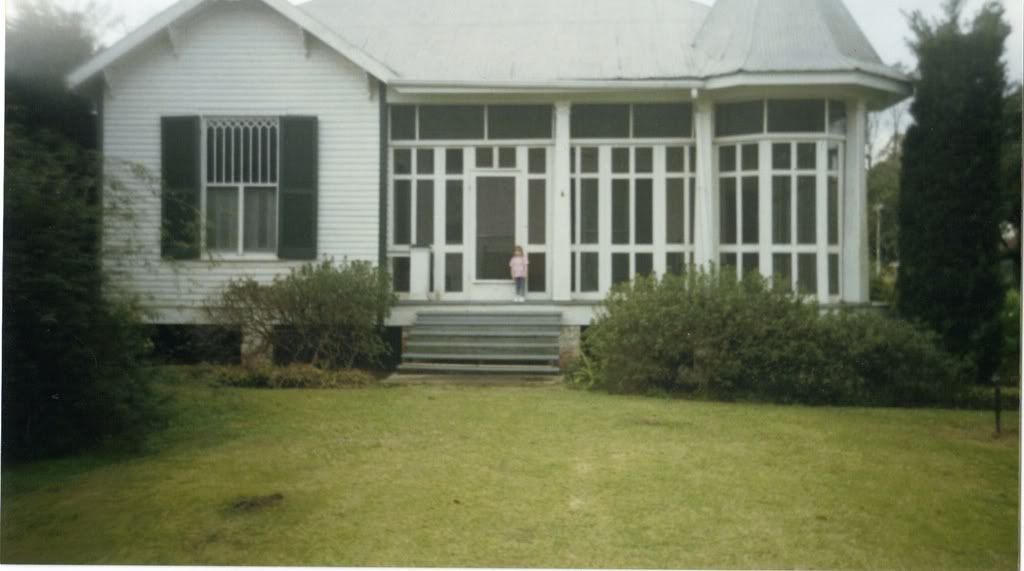
It's called St. Amelie. It's on the River Road, on the east bank of St. James Parish. It was a middle class sugar plantation back in the day. It was one of several such homes in the area that my family, German and Acadian settlers of the German Acadian Coast, owned from the time the Germans settled as indentured servants in 1724 through when the Acadians settled as refugees from French Nova Scotia in the 1760s to the time of the Hymelia Crevasse of 1903 (Hymel - pronounced "E-mel" - was the family name. Hymelia was one of the plantations they owned. A crevasse is a levee breach and resulting flood. The Hymelia Crevasse of 1903 was a levee breach that sent floodwaters from my family's riverfront property across hundreds of miles. For many old time planter families who had struggled to keep planting profitable post-slavery, including mine, this loss of crops, land, possessions, and farming implements was what finally pushed them out of the farming business forever.).
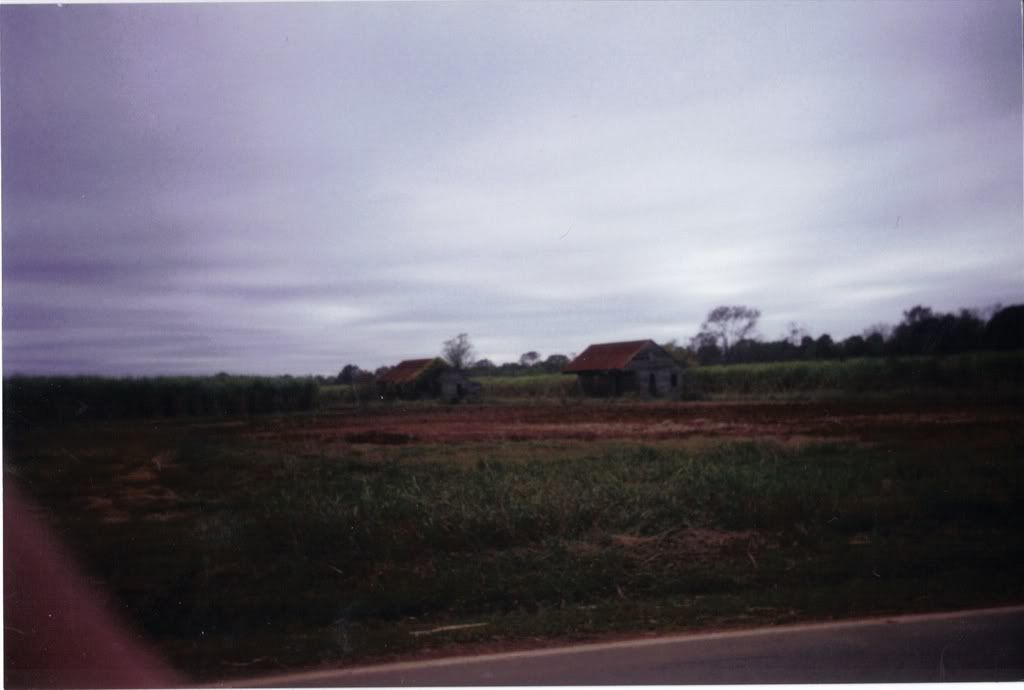
St. Amelie is the only house my family owned that is still standing. The rest of the houses ended up in the Mississippi River as the river changed course over the centuries or ended up just crumbling over time, abandoned or unprofitable after the Civil War. One, Minnie Plantation (thus named by Clairville Himel because Minnie was the nickname of his bride, Lavonia), is now just a chimney in the middle of a muddy cane field (thank you to my husband for tromping through the mud to get this photo for me, and for thinking to bring me back a single brick):
what's left of Minnie Plantation:

Minnie Plantation's chimney from a distance:
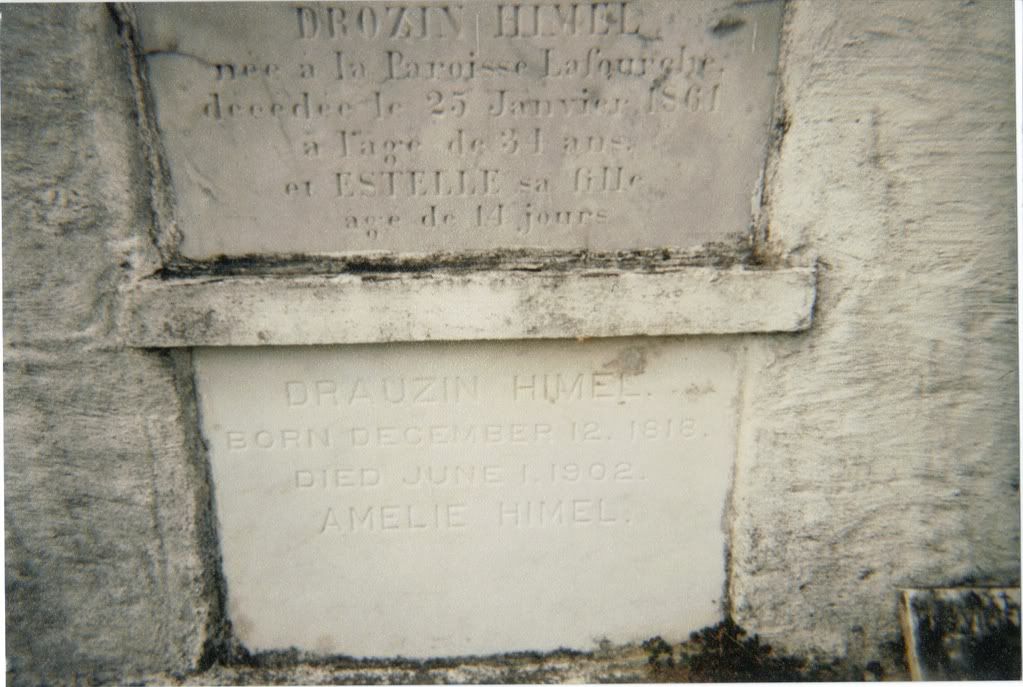
The following reports regarding slaves involve Drausin and Clairville Himel (uncles to Mary Himel Blanchard, see below)
Assumption Parish, 1852: Virginie, a nineteen-year-old woman of color, seeks to recover freedom for herself and her five-month-old daughter named Philomène. Virginie represents that she, her mother, and her two sisters were formerly the property of the late Joseph Bernard. During his lifetime, Bernard took the three women to Cincinnati, Ohio, where in 1835 he legally emancipated them. Bernard and the three women then went to St. Louis, where in 1836 Bernard took steps to ensure the validity of the deed of emancipation. Virginie contends that she and her family lived free “publicly and openly” from 1835 until 1847, with the knowledge of Bernard’s heirs. In 1847, however, she was sold back into slavery by one Théodule Mollère at the instance of Bernard’s heirs. She is now in the possession of Drausin Himel. Virginie seeks an order declaring her and her daughter, born since her emancipation, free and commanding Drausin Himel to pay compensation for her services at the rate of $180 per year until she is restored to liberty. She seeks the appointment of a “curator ad hoc” to represent her daughter.
Assumption Parish, 1852: Celesie, a twenty-three-year-old woman of color, seeks to recover freedom for herself and her two mulatto children, Victorine and Gustave. Celesie asserts that she, her mother, and her two sisters were formerly the property of the late Joseph Bernard. In his lifetime, Bernard took the women to Cincinnati, where in 1835 he legally emancipated them. Bernard and the women then went to St. Louis, where he took steps to ensure the validity of the deed of emancipation. Celesie contends that her family lived free "publicly and openly" from 1835 until 1847, with the knowledge of Bernard’s heirs. In 1847, however, she was sold back into slavery by Théodule Mollère at the instance of Bernard’s heirs. She is now in the possession of Clairville Himel. Celesie seeks an order declaring her and her two children, born since her emancipation, free and commanding Himel to pay compensation for her services at the rate of $180 per year. She seeks the appointment of a "curator ad hoc" for her children. A related petition describes Celesie, her mother, and her sisters as "mulatto" women.
St. James Parish, 1849-1850: Clairville Hymel represents that Henri Baudet falsely and maliciously accused him, in an affidavit before a justice of the peace, of having incited a slave named Valery to run away, and of concealing and stealing him. Hymel further claims that he was “publickly arrested” as a result of the charge and arraigned before a grand jury, although later released. Hymel contends that Valery is not Baudet’s slave but his and, inasmuch as the accusation was “without reasonable or probable cause,” he has suffered damages. He prays the court to condemn Baudet to pay the damages plus costs of suit.
Drausin's grave in Labadieville cemetery
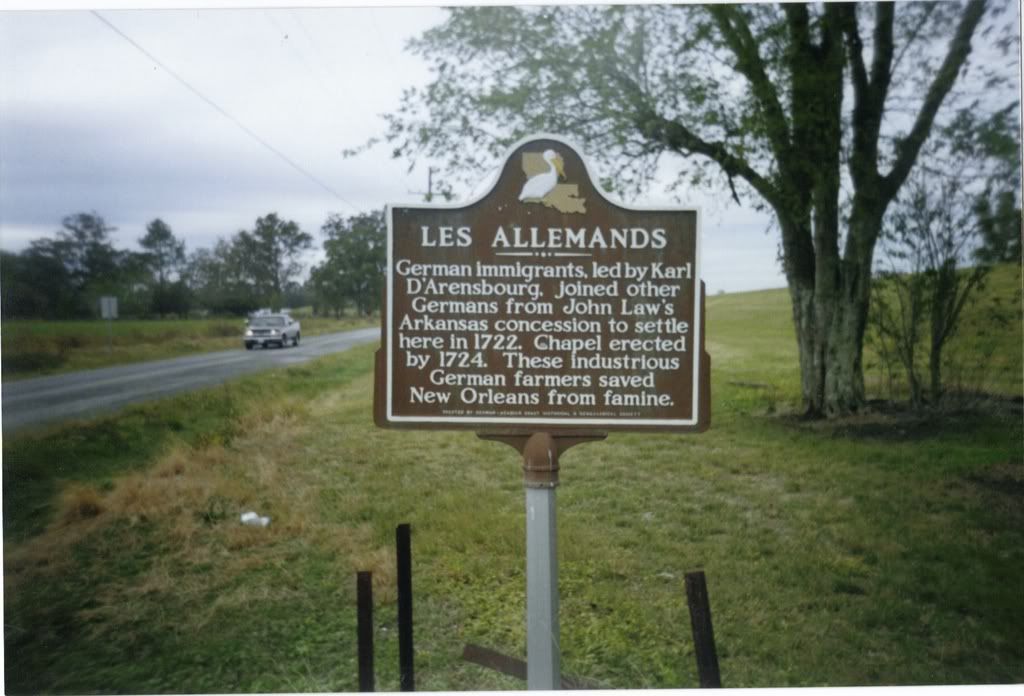
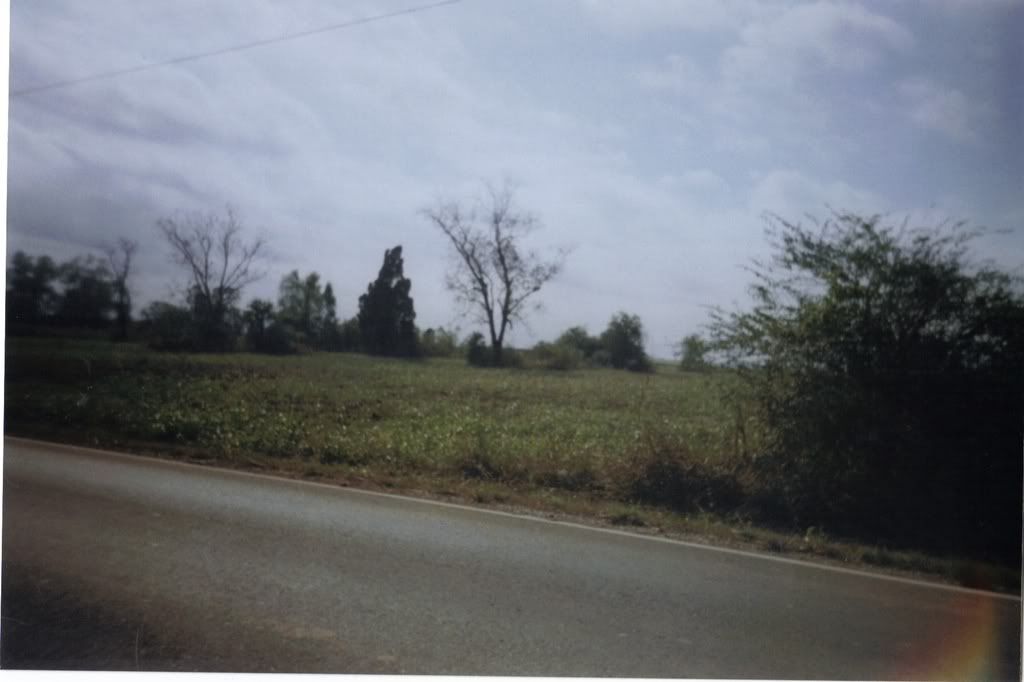
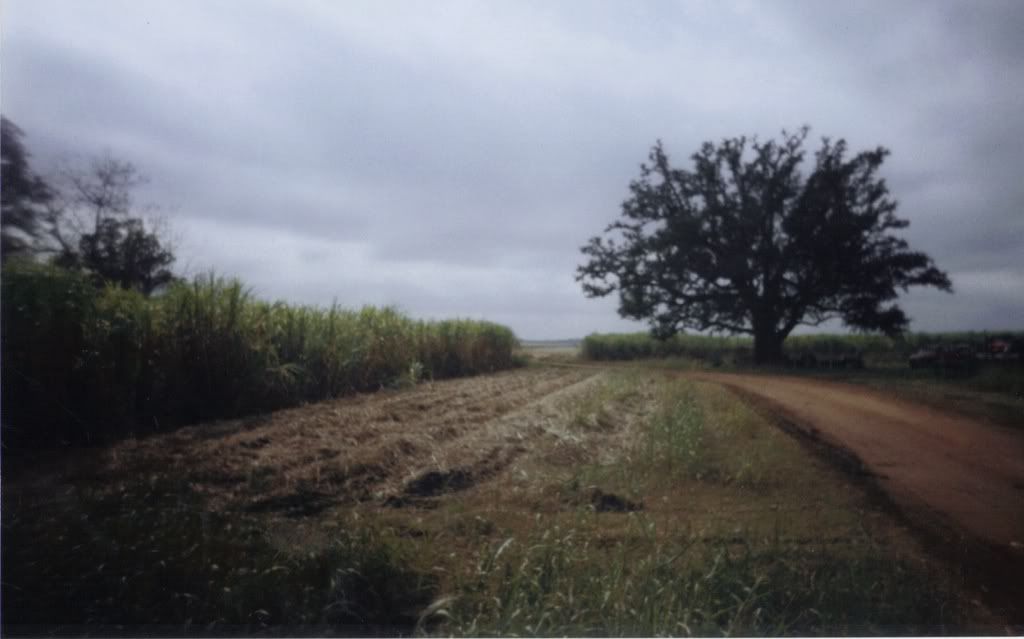
An oak tree stands where a plantation called Welcome belonging to my family used to be. Whenever you find an oak tree in the middle of nothing on the River Road, a plantation once stood there.
St. Amelie is not particularly impressive by modern housing standards. It's much smaller than most modern homes, with just two bedrooms, a living room, a kitchen, and a dining room (no grand rooms like Tara in "Gone With the Wind" or anything). And it's probably much less impressive than Brunswick where Lindy Boggs was born, but even so, it's still nicer than what poor whites had in centuries past and far nicer than what slaves had.
slave quarters in St. James Parish
St. Amelie from the side:
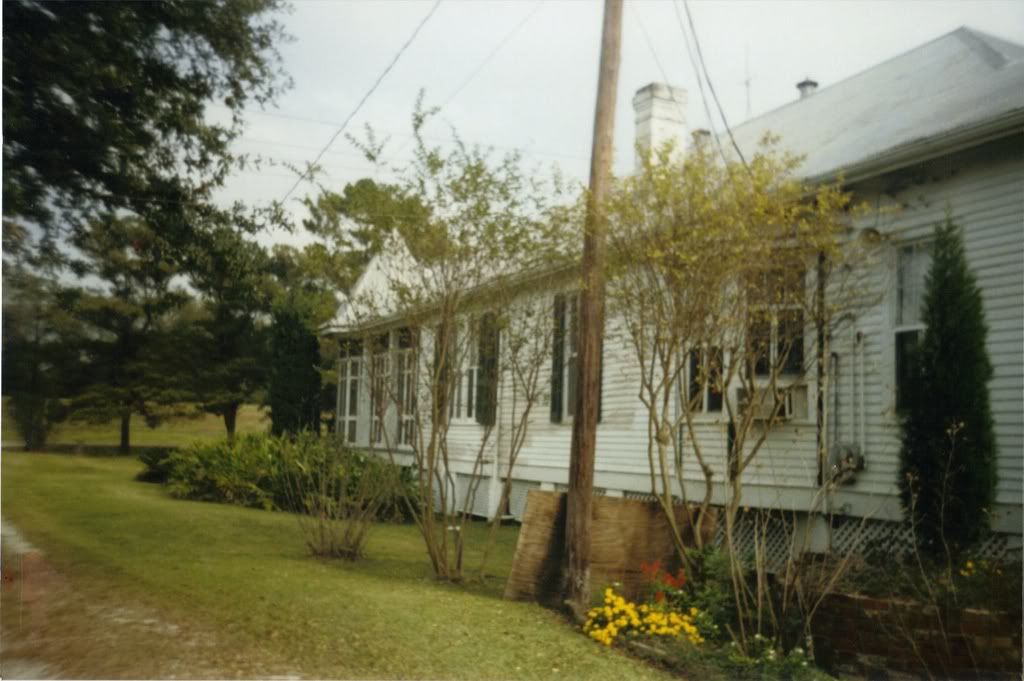
The other side view. My great-grandfather's uncle, Dr. Numa Himel (all lived at St. Amelie together), visited patients by horse and buggy until well into the twentieth century.
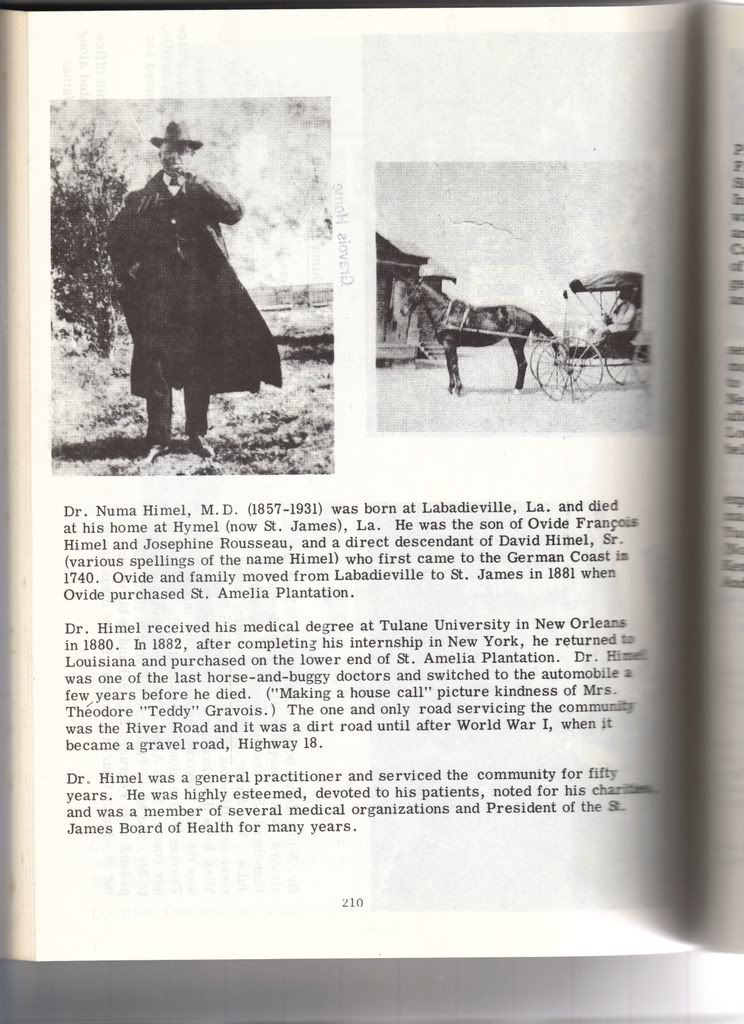
River Road residents who needed a doctor would hang a white flag outside, and the doctor would know to stop. Most families had no cash and the doctor often got paid with chickens or eggs. As Dr. Himel aged, he wanted a partner to join him in providing medical care in the area, but it was difficult to entice another doctor to come work in the country for mere chickens and eggs, so he offered a young doctor from New Orleans a free spot on his land on which to build a home if the doctor would relocate to St. James. Here you can see the newer brick home, built by the younger doctor, Dr. Campbell. Notice the wire between the two houses - this ran between the two doctors' offices and was, in the days before telephones, how the doctors summoned one another.
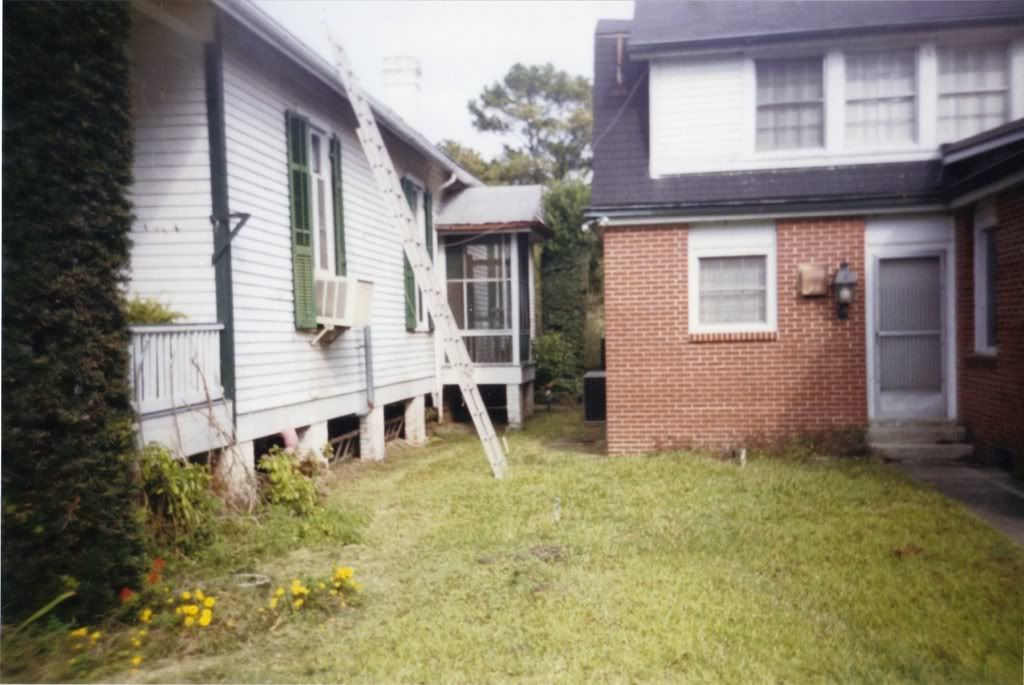
This is the front porch, which my mother remembers being washed with ice water daily by maids so that it stayed really shiny. My part of the family was not generally welcomed at the old Creole plantation because we were, scandalously enough, Irish half-breeds, but my mother was once sent here for the summer as punishment because she had failed her Catholic school French class. As a result, she had to spend three months out in the country, bored to death, with two old maid great aunts who only spoke French to her (although they were bilingual schoolteachers - talk about learning a language by the immersion method!). The aunts found it shocking that their brother's own grandchild had actually failed French and took that fact to be further proof of the folly of his having married a lowly Irish woman. Said they of their sister-in-law, "She can scrub her floors and wash her clothes as much as she wants, but she will always have the taint and smell of the Irish."

My Irish great grandmother, Catherine Caroline Mullen Blanchard (1897-1977; seated, right)
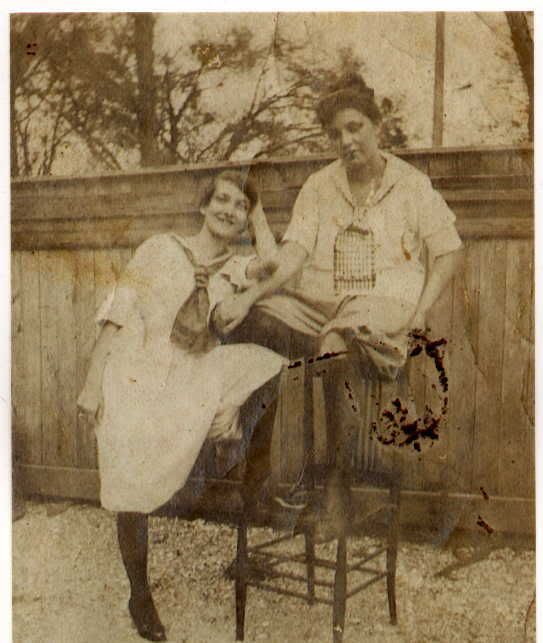
This is an old sugar kettle that is now being used as a planter behind St. Amelie. In the old days, slaves cooked down the cane over intense heat through a series of kettles until only granulated sugar remained. Because Louisiana has only a semi-tropical climate and does sometimes get freezing temperatures in winter (while sugar is usually a cash crop only in frostless tropical climates because the crop takes many months to mature and can not survive a freeze), the cane crops here had to be feverishly harvested round the clock as soon as they matured, lest the stalks be turned to mush by a single overnight freeze. And so during the harvest season slaves on Louisiana sugar plantations worked in exceptionally brutal conditions. Seven days a week, they worked at least two eight hour shifts a day and sometimes twenty hours a day (the Code Noir required that slaves be given Sundays off, but that law was routinely ignored on sugar plantations during harvest season). As a result, slaves on south Louisiana sugar plantations had fewer live births, suffered more illness, experienced more fatigue-induced accidents, and faced much shorter life expectancy than did other slaves of the era.
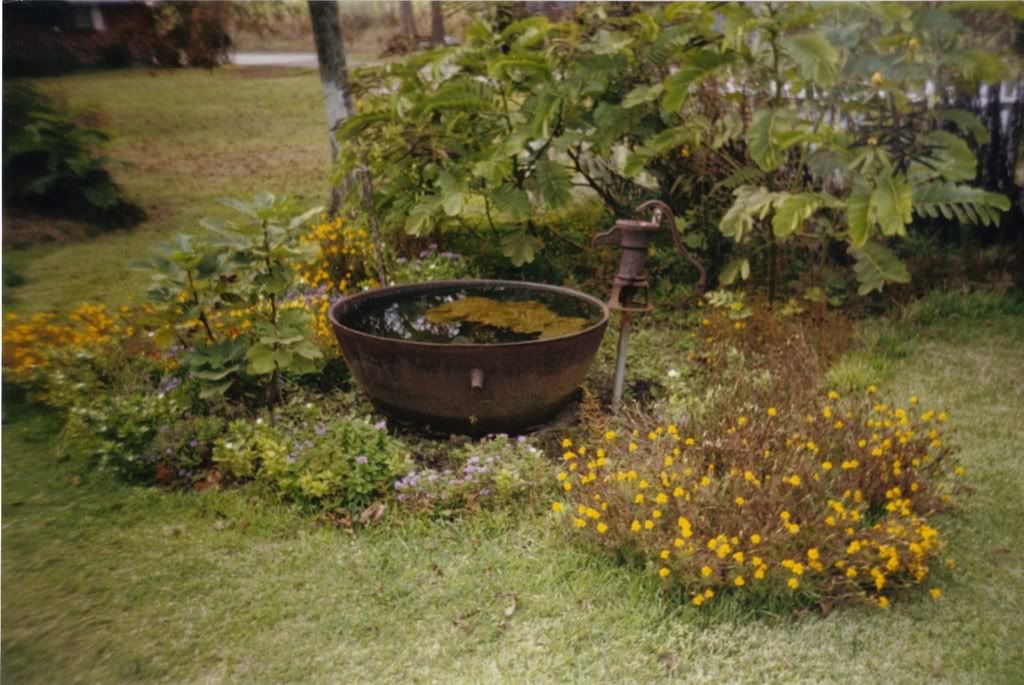
In one of the two bedrooms, my great grandfather's crib, already an antique when he slept in it, can still be seen (bottom of the photo). Another family now owns the home and lives in it. Luckily, they have kept EVERYTHING original except for, they say, hanging their clothes in the closet. They did have a kitchen added on to the actual house; in the old days, kitchens were always separate buildings because of the risk of fire. In their old age, the aunts sold this place to proper French strangers because they found that preferable to having Irish halfbreeds inherit it.
I should mention that all photos of the interior of the home were taken when I just knocked on the door and introduced myself one day. Mr. and Mrs. (very French surname) understood right away who I was and how I was related to the previous owners, but even so, their graciousness in allowing a stranger to walk through and photograph every inch of their home was extraordinary.
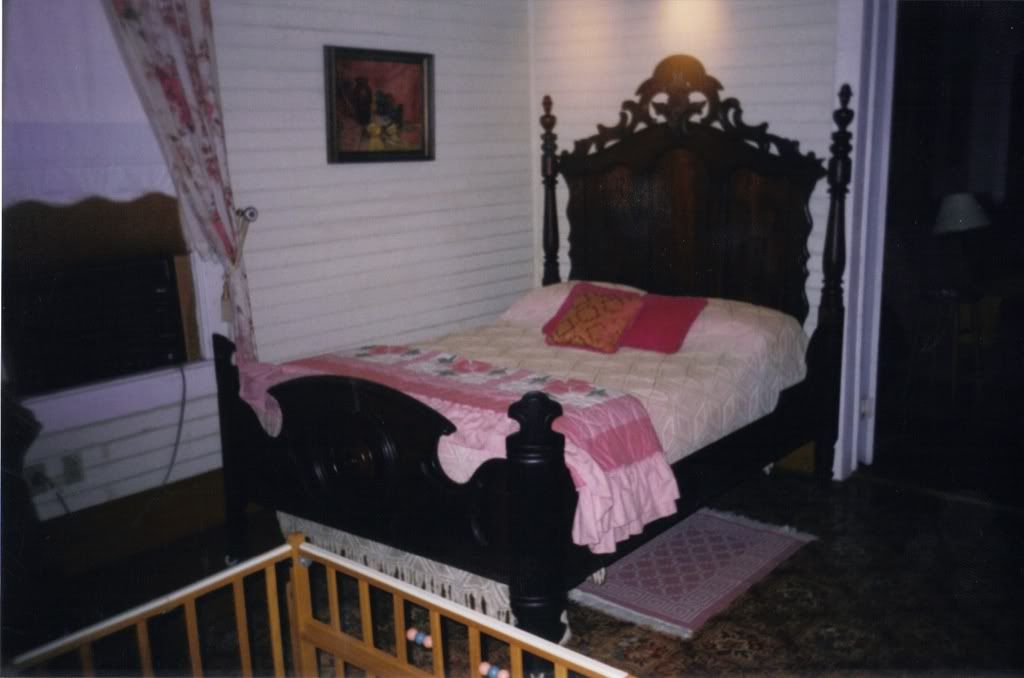
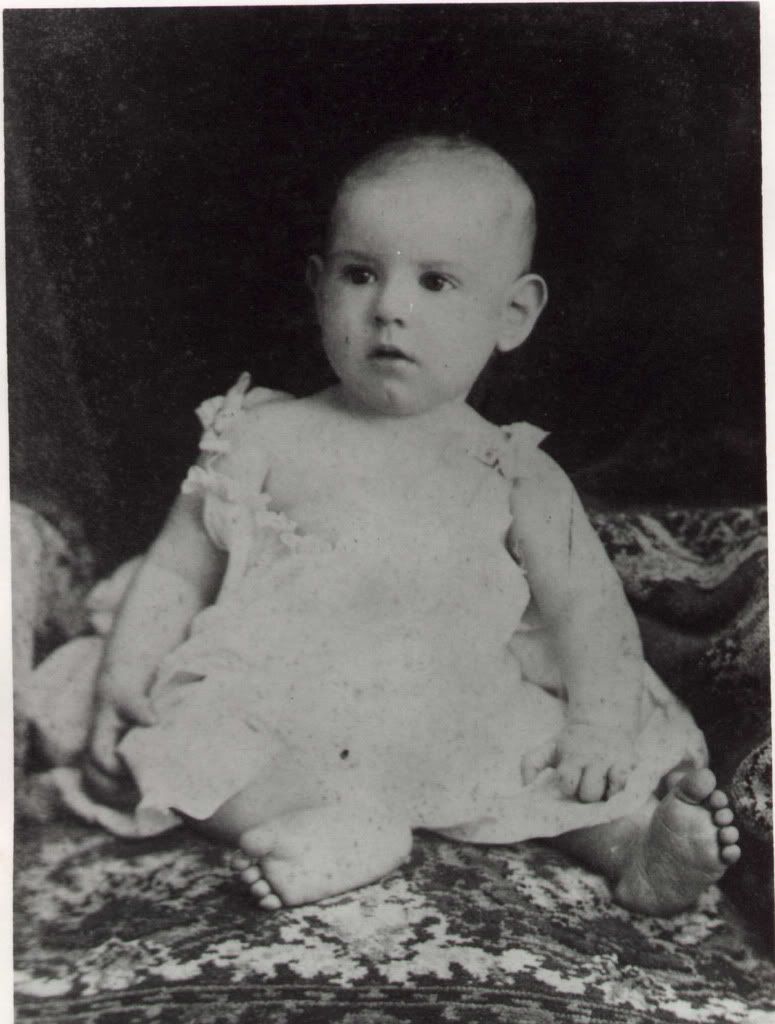
my great-grandfather, Arthur Eli Blanchard II, as a baby (1891-1971)
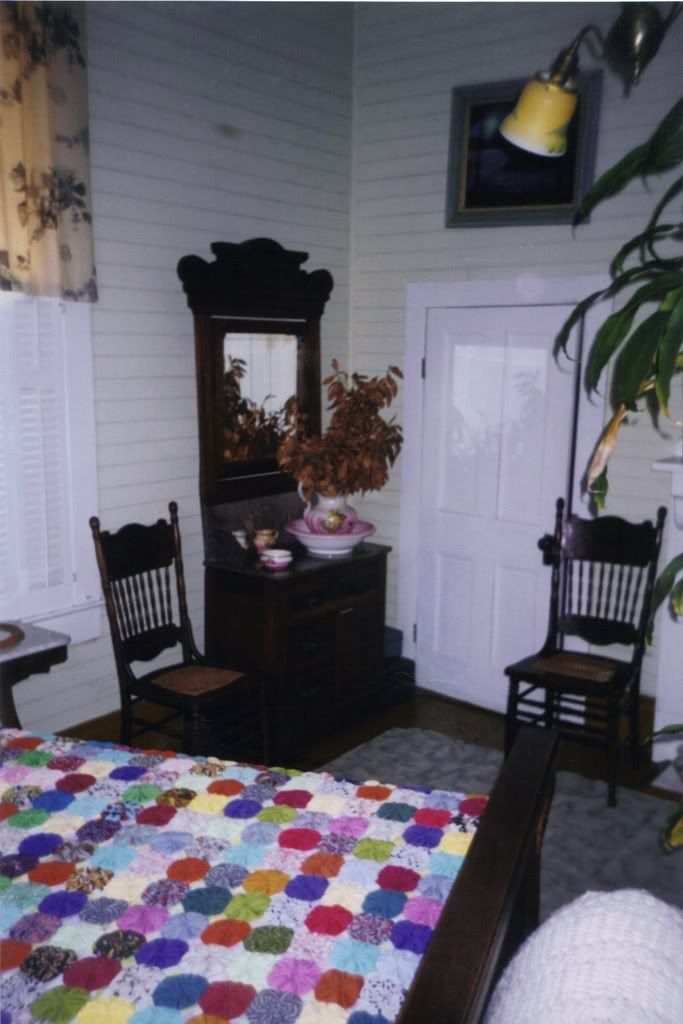
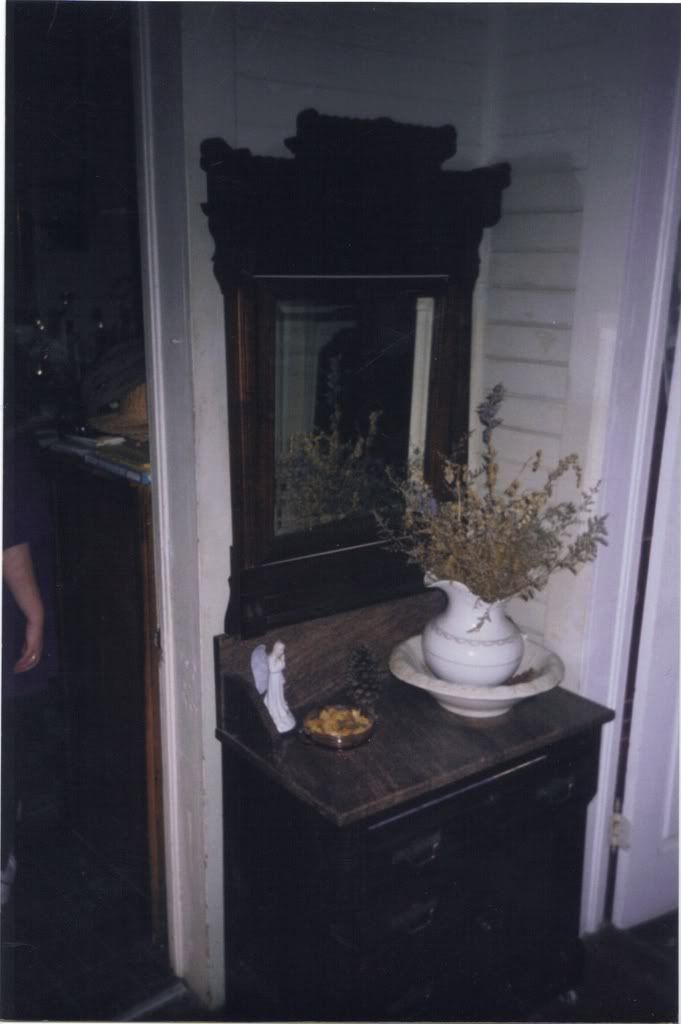
wash basin
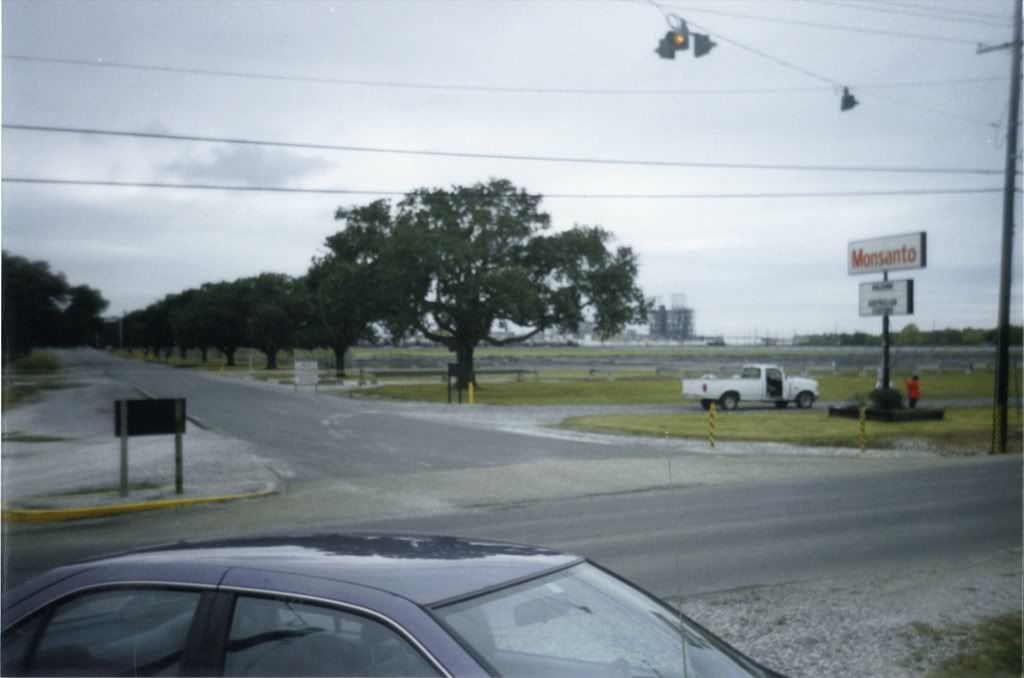
These days, few families farm in this area, although agribusiness does still grow some sugar cane here. Large blocks of land - former plantations - were sold decades ago to petro-chemical companies like Exxon, Shell, breast implant and Agent Orange specialist Dow Chemical, Union Carbide (responsible for a 1984 chemical release in India that it admits killed 3,000 people and Green Peace claims ultimately killed 20,000), and Monsanto (if you don't already hate and fear the evil Monsanto, click on the links to find out more about their genetically modified food, their terminator seeds, the recombinant bovine growth hormone in your dairy products and how they've sued farmers advertising rBGH-free products, their efforts to get patents on the breeding and herding of pigs, their responsibility for 56 environmental superfund sites in the U.S., and how they sued a 70 year old Canadian farmer for "seed stealing" because their genetically modified seed was carried by the wind onto his land - after years of their assurances that genetically modified seeds knew how to stay in their own designated spaces and would never contaminate naturally occurring species). The companies purchasing the land have sometimes destroyed grand homes of great historical significance, but in a few cases of relatively responsible corporate citizenship, companies have paid restoration costs, and old large plantation homes on the grounds of sprawling petro-chemical processing plants now serve as on-site meeting rooms.
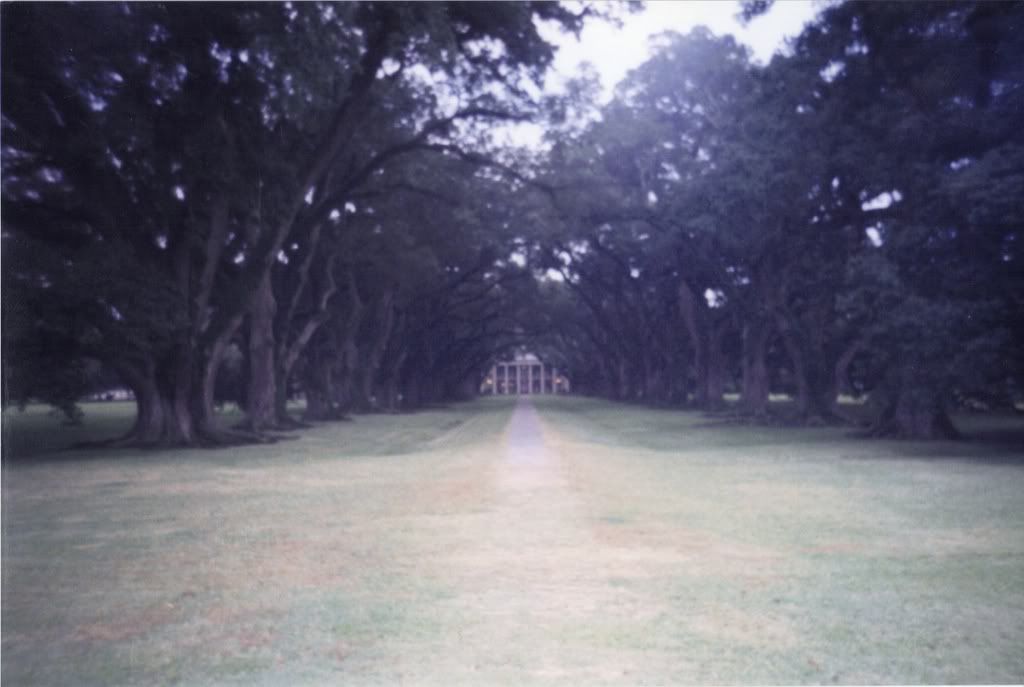
The families who remain here - mostly the descendents of slaves - face extremely elevated risks of miscarriages, birth defects, cancer, and other ailments due to water, air, and soil contamination from the chemical plants (as The Who might say, meet the new boss, same as the old boss). Near St. Amelie is a large plantation open to tourists that is called Oak Alley. Here in Louisiana, however, this entire region is now known to us as Cancer Alley.
the entrance to the Monsanto plant (notice the row of oak trees, indicating that this was once the entryway to a plantation):
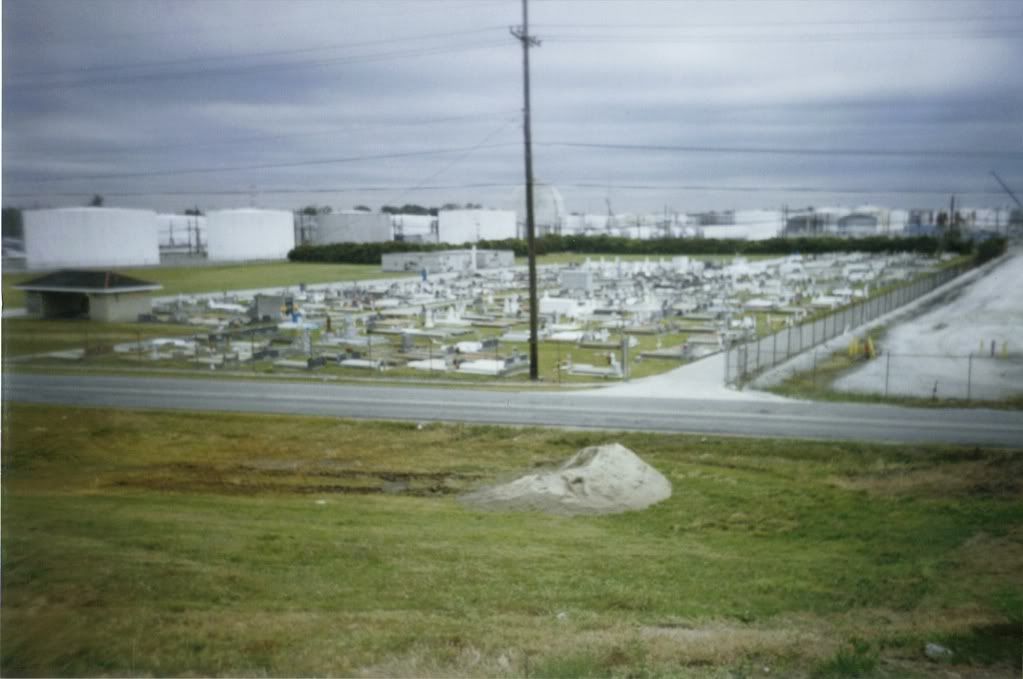
chemical plants have been built around the old cemetery...:
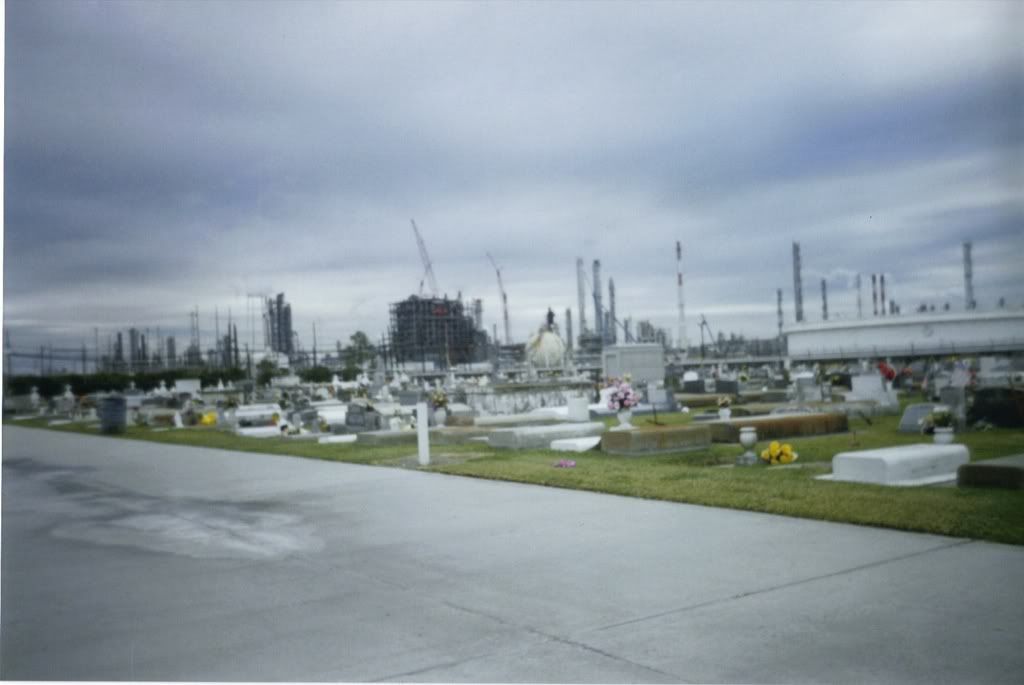
...down the street from St. Amelie and tourist mecca Oak Alley (below):
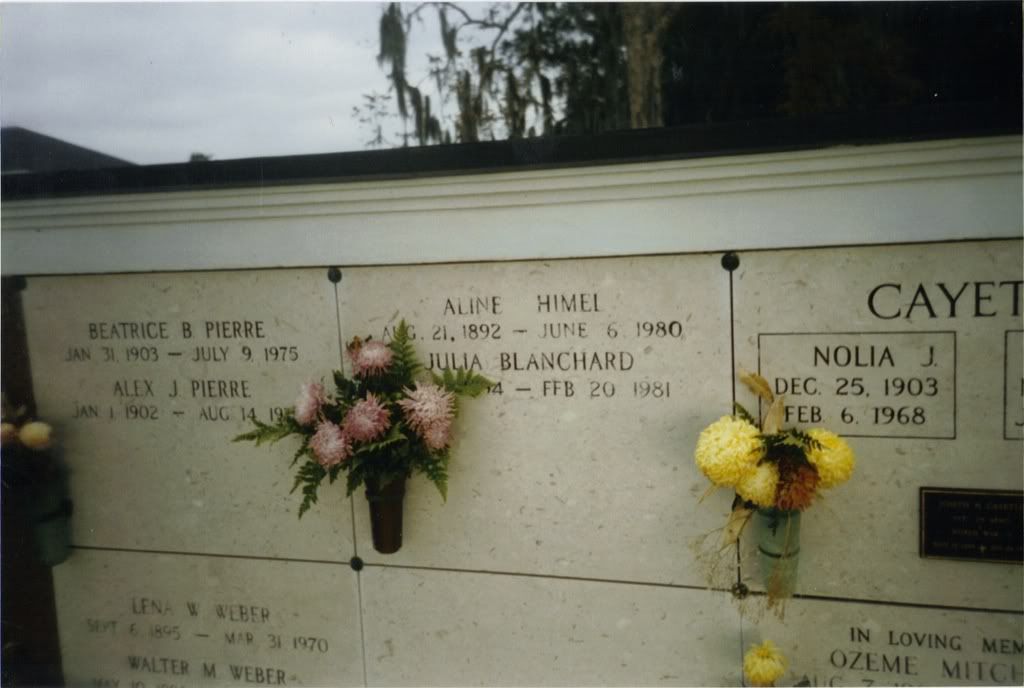
the aunts' gravesite in St. James cemetery (Himel and Blanchard):
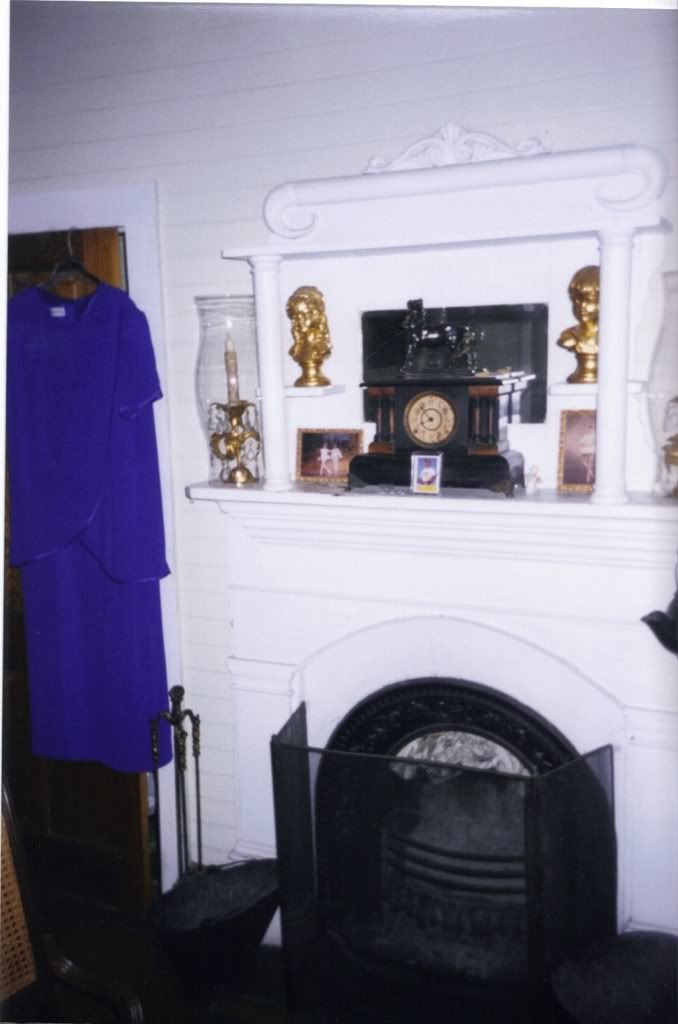
the dining room fireplace with original tools, clock, and mantel knick-knacks:
another fireplace, still more Victorian basins (there were some in each room):
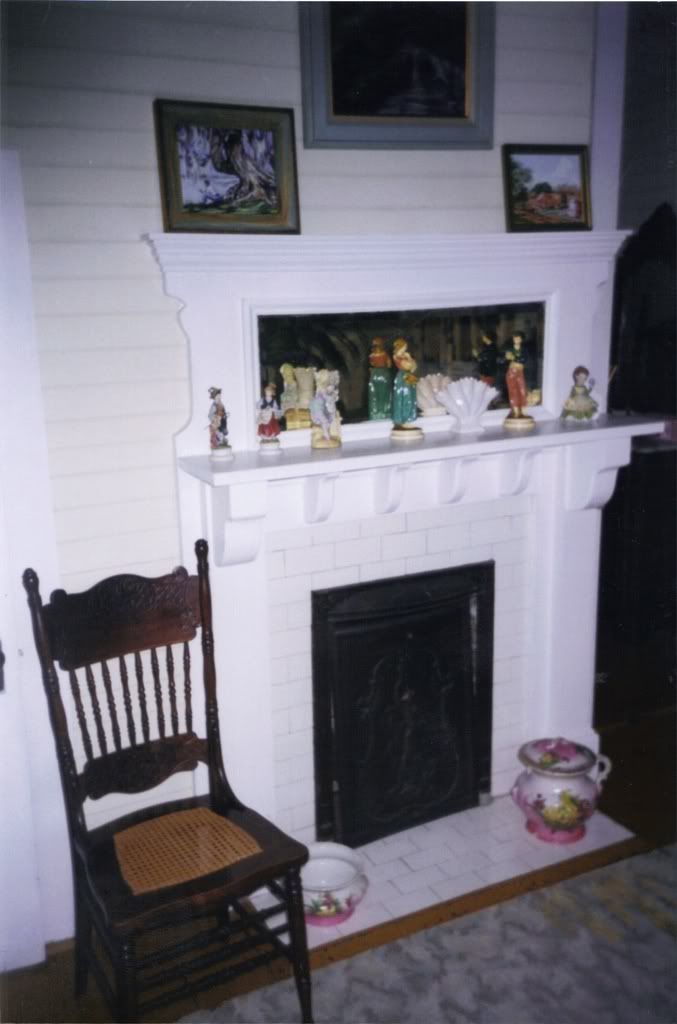
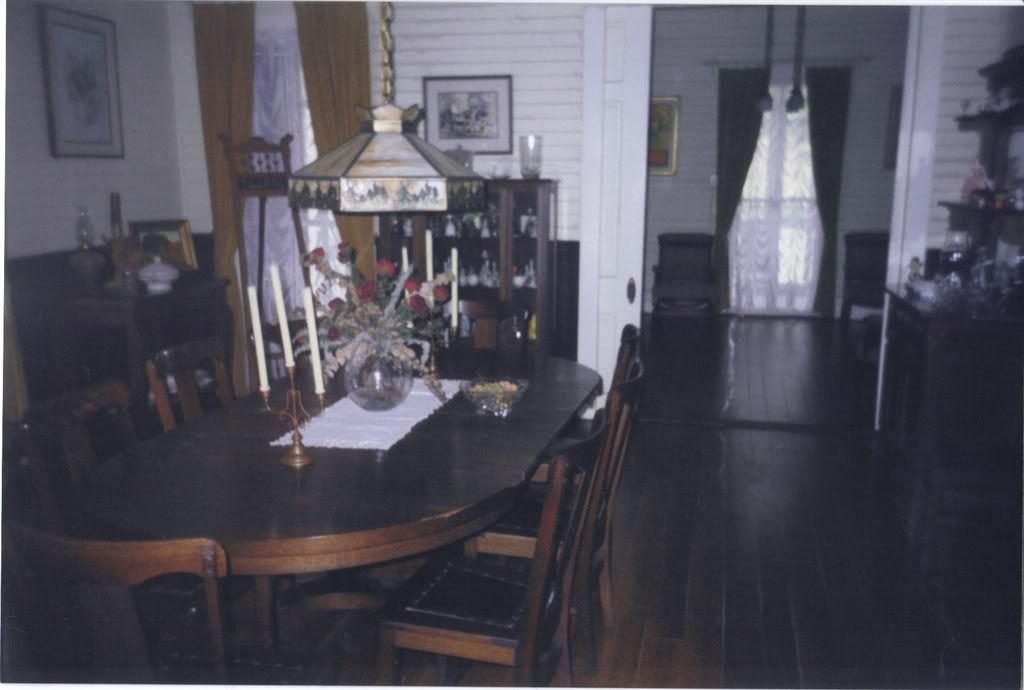
This is the dining room. To the left is a sideboard that was used as an ice cart. My grandmother vividly remembers from her visits that during meals, a maid would take each diner's drink and keep it on ice in the cart, then hand the drink over each time the diner wanted a sip.
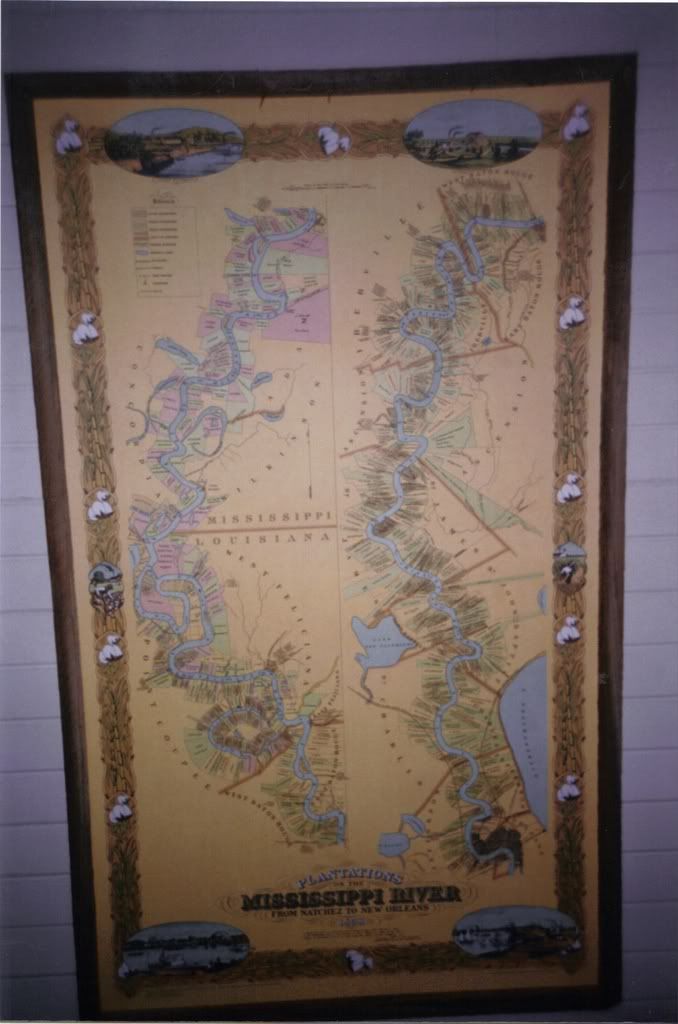
This is the Persac map in the dining room. Most plantations on the River Road had a copy of this map. Persac had surveyed the area, and the map showed every plantation along the river and named the owner of each. The names are difficult to read because the river turns so many times and because land grants were, in the French custom, long and narrow so that each plantation had access to the river, where goods were shipped and people could travel by boat (the long, narrow strips make reading the owners' names very difficult).
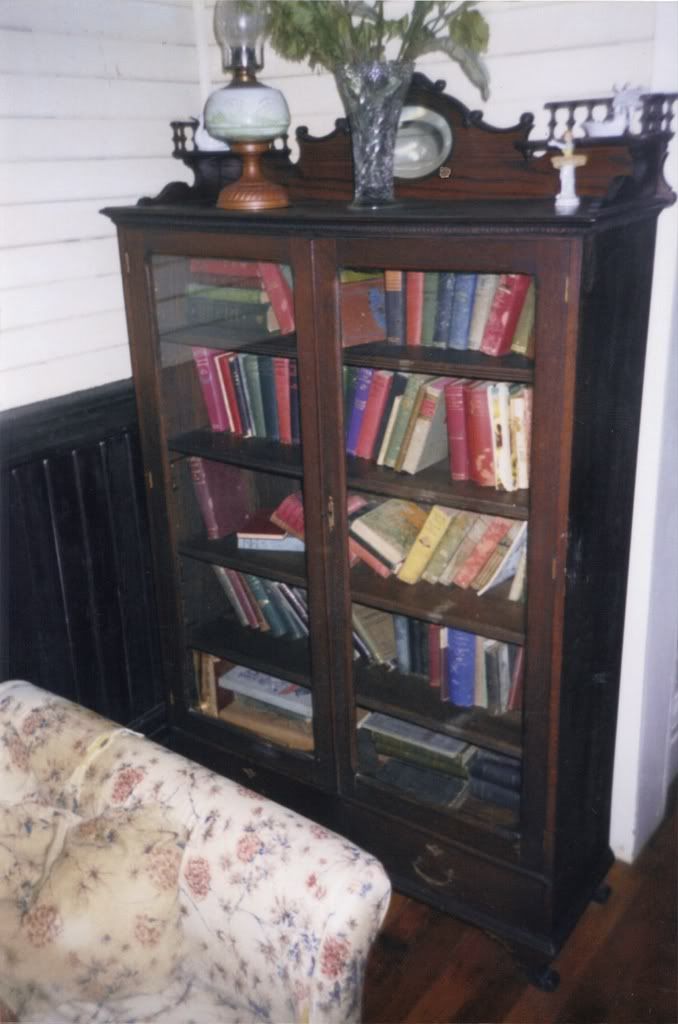
A hallway bookcase with the original books belonging to my great grandfather's uncle, Dr. Numa Himel. My great grandfather and his two sisters returned from New Orleans to this house, the childhood home of their mother, Mary Himel Blanchard, when they were small children after their father, Acadian riverboat pilot Captain Arthur Blanchard, died suddenly in his thirties. When her elderly great aunts sold this place, my mother was permitted to choose one thing from the home for herself (the custom was that when a plantation was sold, the furnishings went with the house). My mother chose a set of books - the complete works of Sir Walter Scott. The books were originally given to my great-great grandmother, Mary Himel Blanchard, by her brother, Dr. Numa Himel, one or two each Christmas, over about a twenty year period in the second half of the nineteenth century. Inside each book is an inscription with the siblings' names, "Merry Christmas," the date (December 24 or 25 and the year), and sometimes a brief note. These books were the bestsellers of that period and greatly influenced the worldview of white antebellum southerners. The books, such as "Rob Roy," presented themes like honor, chivalry, and gender in ways that epitomized the values of white southerners - particularly the planter classes - on the eve of the Civil War. My mother still has them, although some sustained a little water damage during the famous "May third" flood of 1978. When my mother fled south Louisiana ahead of Hurricane Katrina in 2005, she packed only necessities. In the final hours before Katrina made landfall, as the winds were already frighteningly intense and the electricitiy had already gone out, my husband drove sixty miles to my English teacher mother's home to rescue her important documents, photographs, an antique set of the complete works of William Shakespeare, and the Sir Walter Scott books from the old plantation.
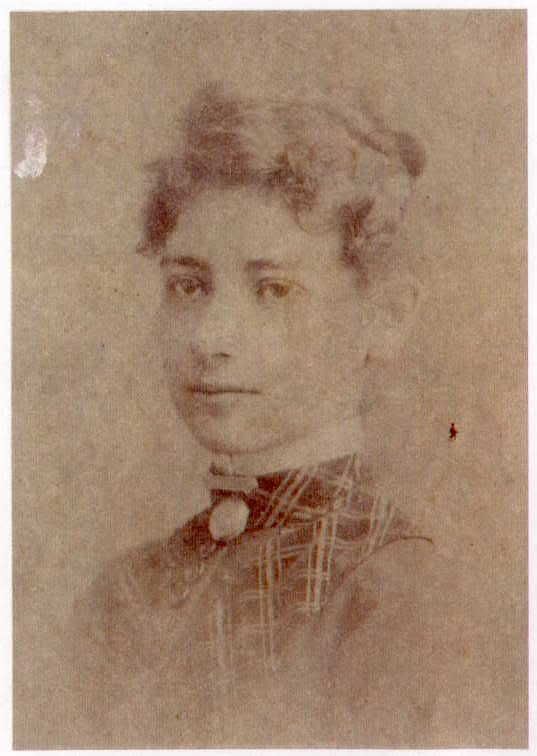
My great-great grandmother, Mary Himel Blanchard (1865-1945)
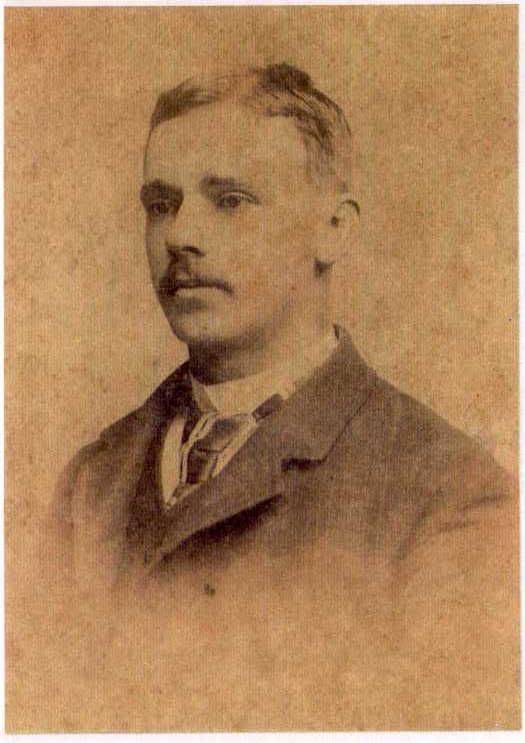
My great-great grandfather, Arthur Eli Blanchard (1858-1895)
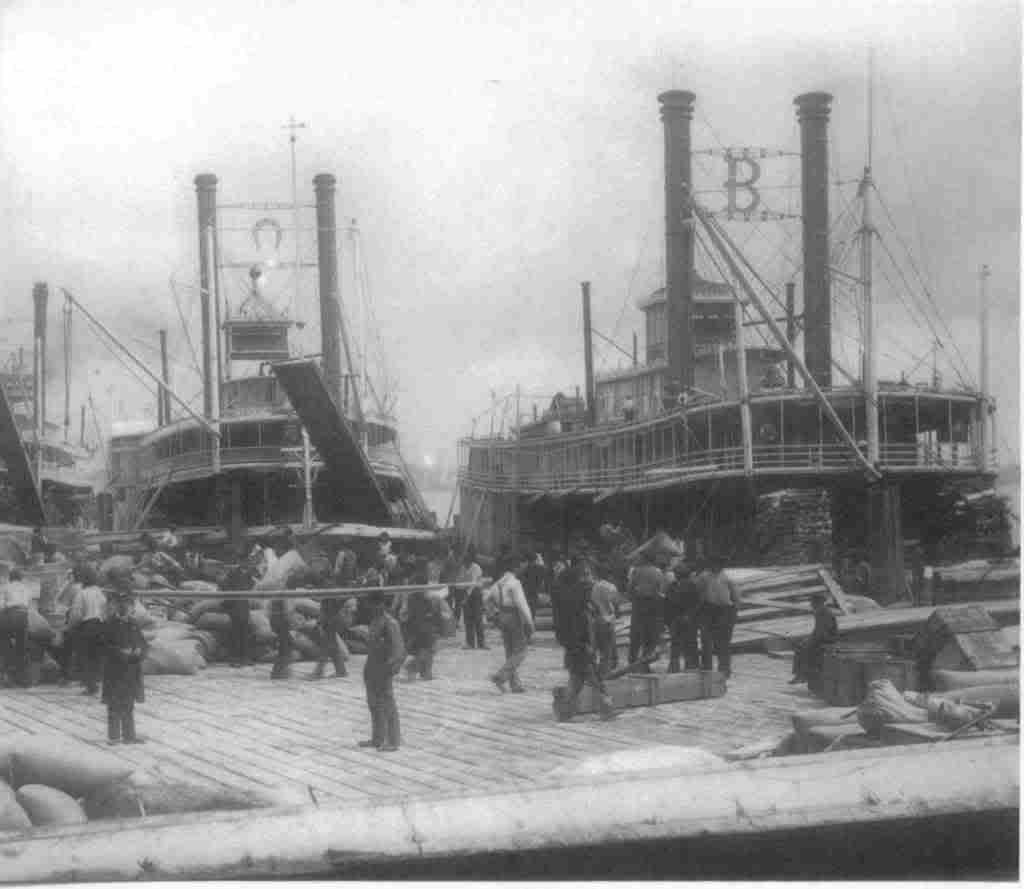
Below is the steamship G.W. Sentell (G.W. as in "George Washington"), purchased in July, 1891, as a joint venture of the Blanchard Brothers (one of several steamships owned over the years). It was owned by C.J. Blanchard, the eldest brother, who served as her Master; by Arthur Blanchard (above) who served as Chief Engineer; by Max A. Blanchard (who was considered Max, Jr., although the brothers' father was Maximin Telesphore Blanchard, a son of Acadian refugees from French Nova Scotia); and 2 friends or investors: Frank Dunos & Nicolas Burg. Max, Jr., & Edgar served as pilots. In August of 1892, according to the Daily Picayune, C.J. had a large B mounted between the stacks, which had already been painted a bright red. The Sentell was a sternwheel packet with a wood hull built in Jeffersonville, Indiana. On December 28, 1894, while docked near Hillary St in Carrollton, she burned & sunk. The exact cause of the fire was unknown.
Federal records of shipping-related deaths and accidents show the Blanchard brothers were peculiarly prone to losing black deckhands and screwmen during the night, without witnesses, to fatal accidents or drowning. Granted, the river trade was very dangerous in those days, but the Blanchard brothers seemed to lose black sailors in particular with alarming frequency. Eventually, the respected and well-known C.J. Blanchard would face trial for murder over one such case once his ship had docked in St. Louis, apparently outraging New Orleans newspaper reporters and editorial writers.
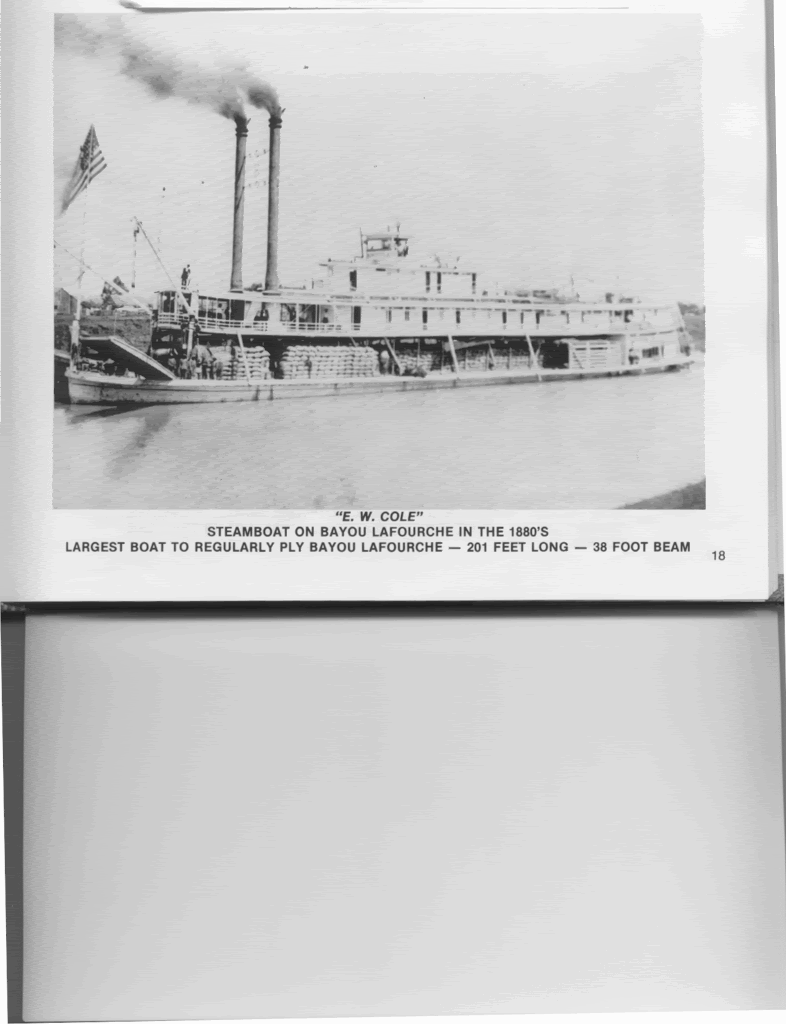
Below, another steamboat owned by Max Blanchard, Sr., the E.W. Cole. Max Blanchard purchased this boat in 1886 from Captain Thomas L. Morse. In 1888 (after winning the state lottery) he spent over $8,000 to overhaul her. She then began to ply Bayou Lafourche as a regular packet. The Cole was 201 ft long, 31 ft in the beam with 5.4 ft depth of hold, reportedly the largest boat to regularly steam on the bayou. The Cole was built in 1880 at Jeffersonville, Ill. She was snagged and sunk on January 1, 1891. At the time of the sinking, Max Blanchard was master; O. Blanchard and Frank Hymel were mates; Max Blanchard, Jr., and Camil Jacobs were pilots; A.E. Blanchard and Charles Gillham were engineers; Amede Blanchard was carpenter. As with the Sentell above, a large "B" can be seen between the smokestacks.
hallway at St. Amelie - wash basin
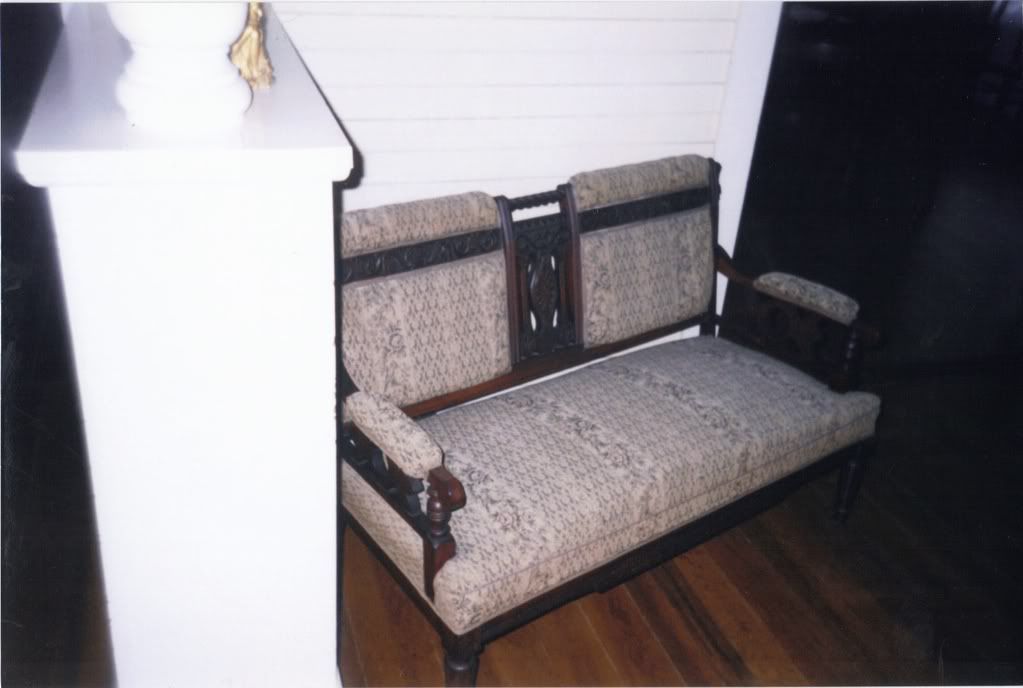
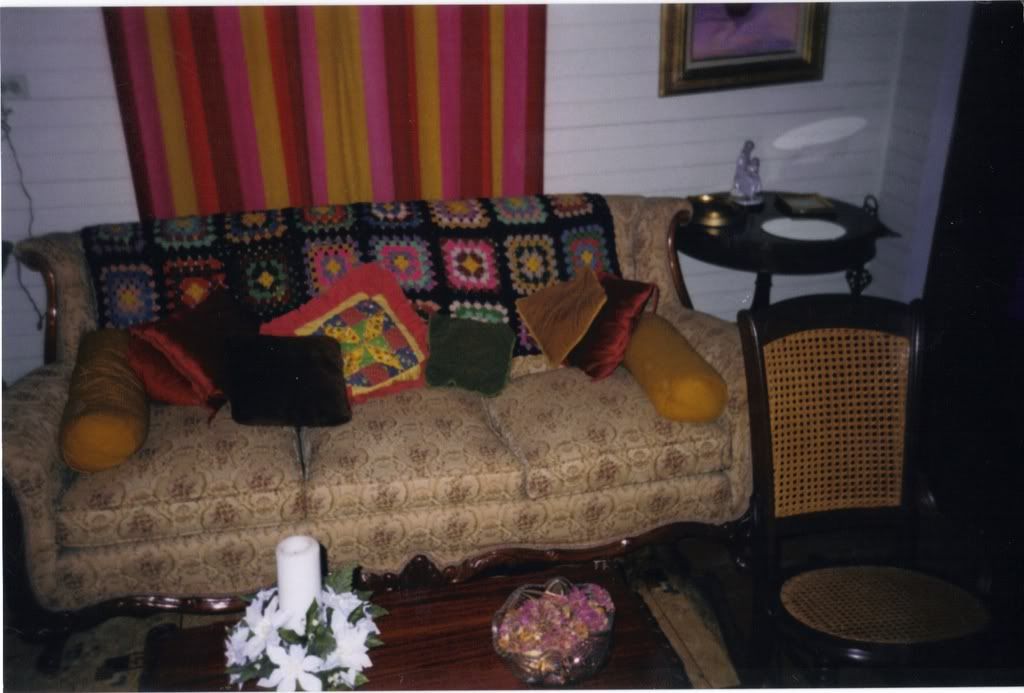
The camel hide sofas in the living room. My mother remembers that children were not allowed to play in this room or sit on this furniture (which was fine with her since apparently camel hide is really scratchy). I can't imagine any other space inside where kids could have played; I guess they just stayed outside most of the time. My grandmother relates that when her father was disciplined as a boy, his mother would dress him as a girl and force him to stand on the levee for all passersby to see. In his teens, my great-grandfather's idea of fun was to line up "pickaninnies" and see how many he could jump his horse over. God. Maybe "American Idol" is not such hideous entertainment after all.
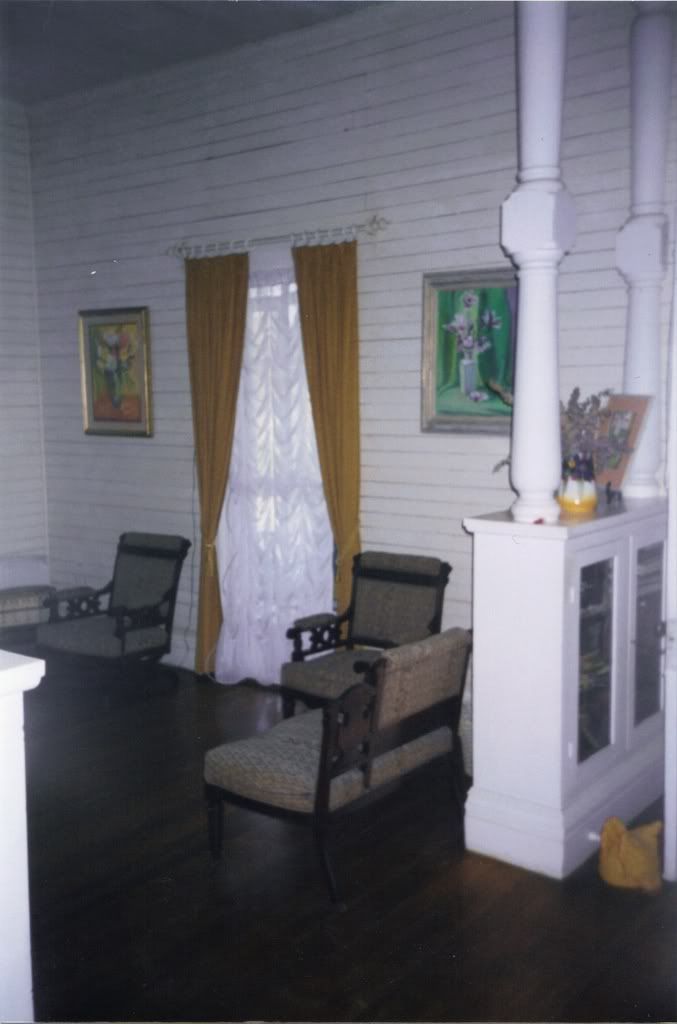
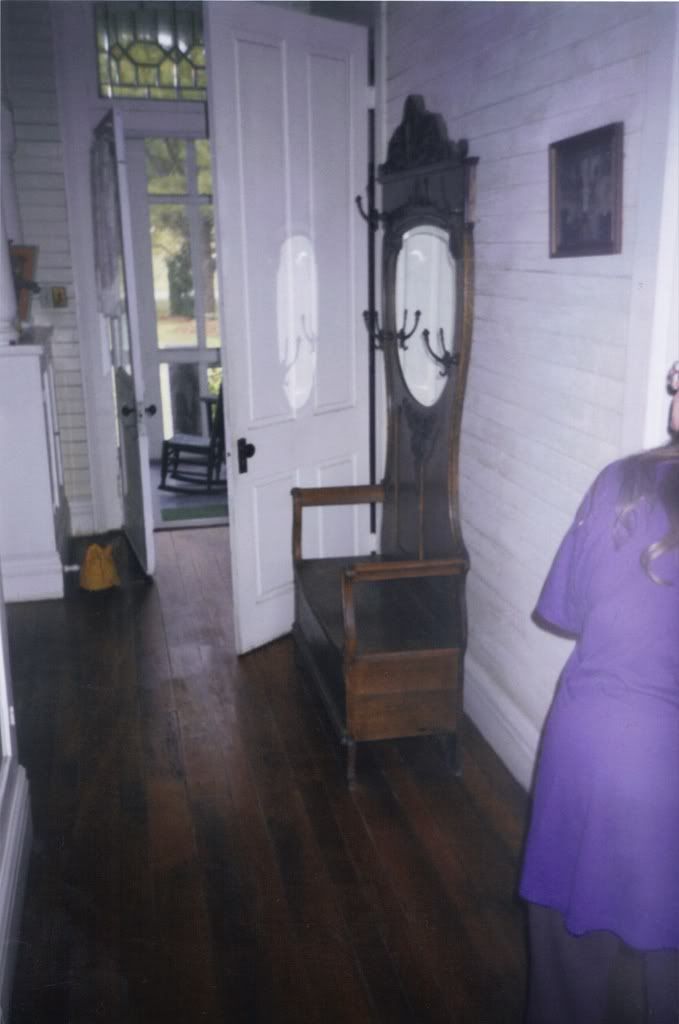
The hallway, facing the front door and porch. The piece of furniture on the right was for holding hats and coats, obviously, but my mother remembers that the drawer in the bottom was the only place in the house where the aunts kept anything fun for children. On rainy days they would open it, and inside were hundreds of scrolls the aunts had made from newspaper comics. Each one had two sticks, and my mother would hold the sticks to unroll the scrolls and enjoy reading the comics inside (hey, the aunts didn't have television).
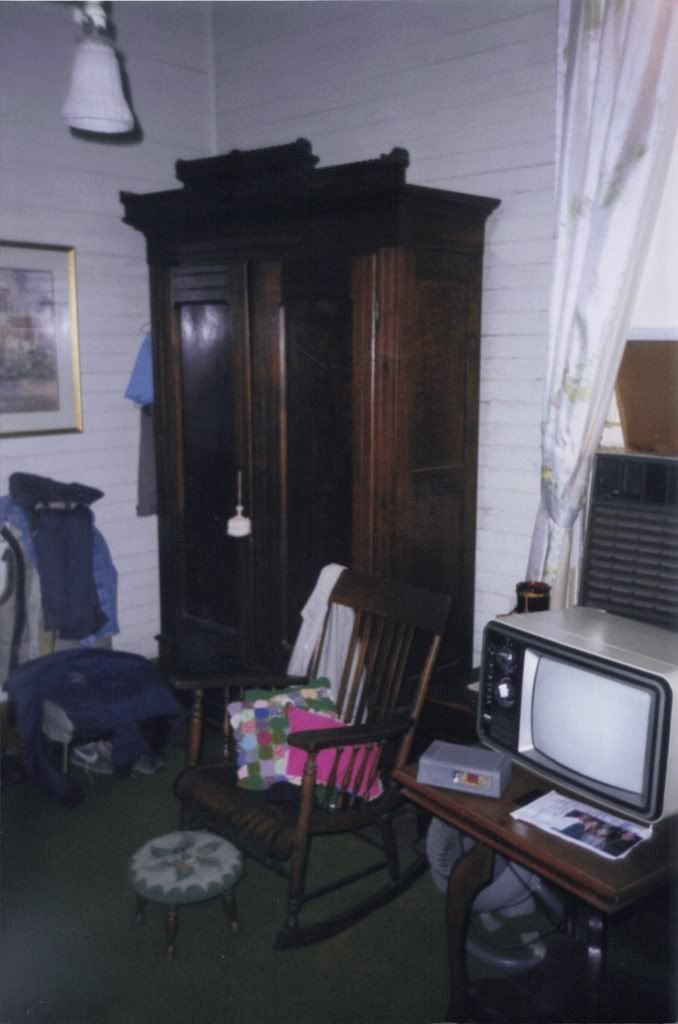
bedroom 2 - wardrobe
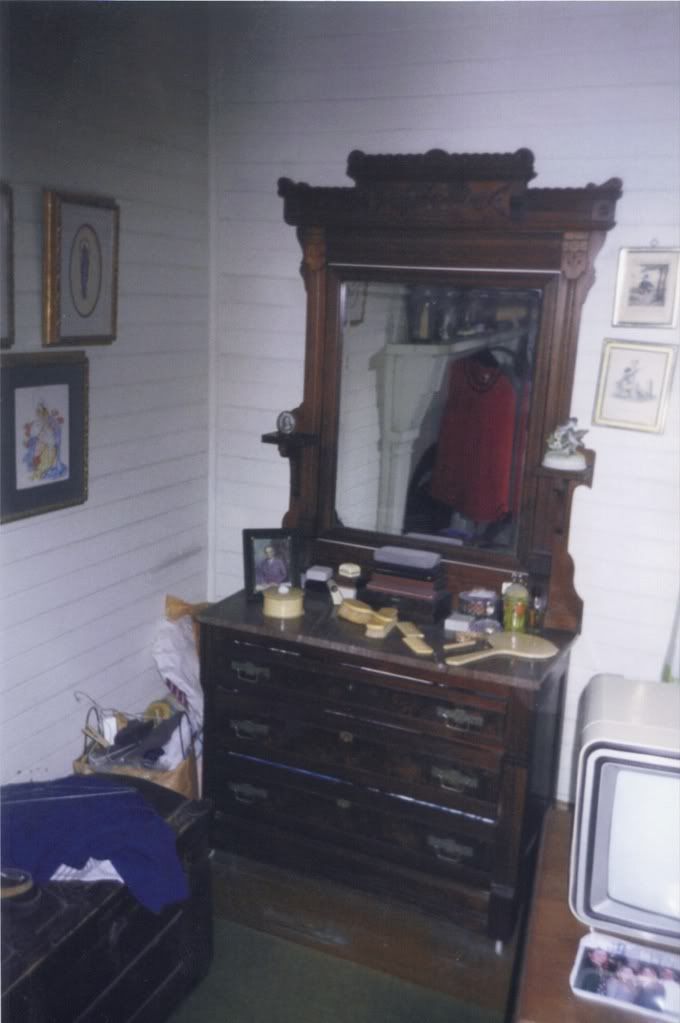
bedroom 2 - dresser
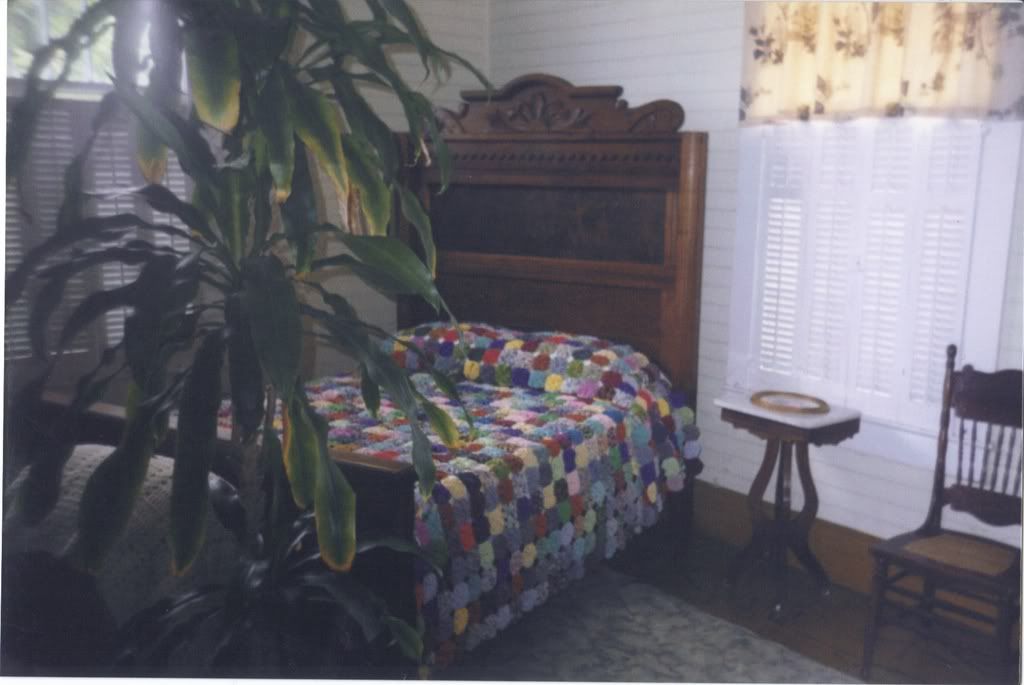
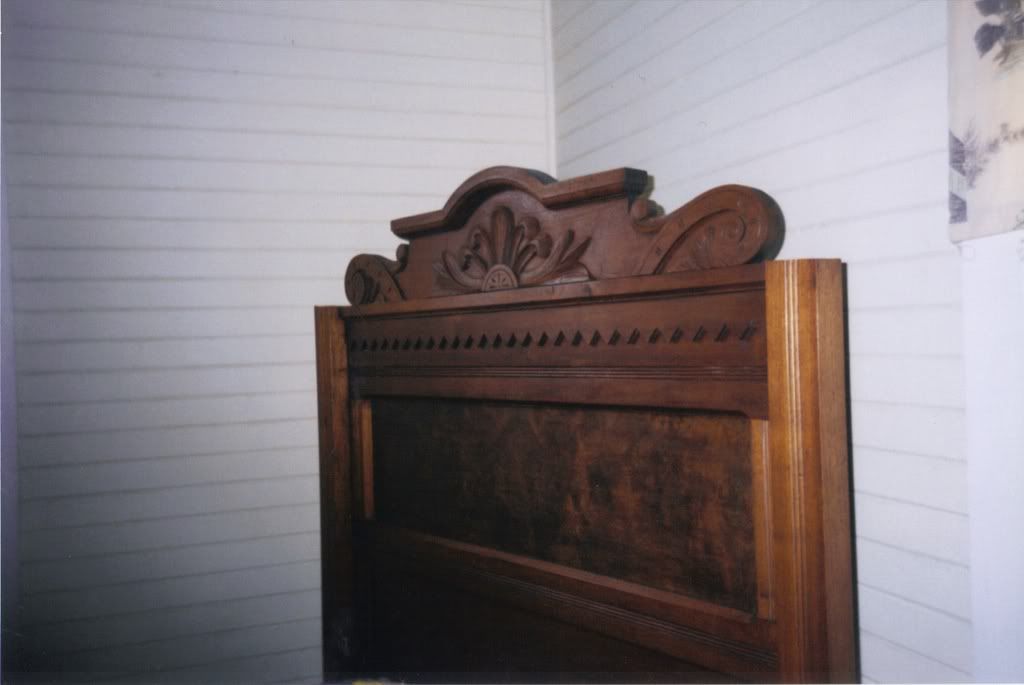
In bedroom two, a tester bed (pronounced "tee-ster"), which was basically a canopy bed and had mosquito netting draped over the whole thing, although someone has in recent years chopped off the four corner poles.
So, there it is - Cokie, Mother, little sister - our past, as a people. Take a good look - at the shiny porch floor and the ice cart maintained by maids; at the slave quarters; at the cane fields; at the old sugar kettle that meant backbreaking, round the clock labor and early death to so many human beings; at Mark Twain's beloved glamorous Mississippi River steamboats on which black sailors who displeased could simply disappear.
When will we finally move beyond who we as a people, as a region, have been?
Why are lifelong Democrats I love doing what you're doing? Cokie says Obama is "exotic." My mother says he "can't be trusted." My former Carter delegate aunt is horrified by the prospect of his being the nominee.
He's not supposed to get to live in the white house, right? I mean, not St. Amelie on River Road, not Brunswick in Pointe Coupee, and not the other white house at 1600 Pennsylvania Avenue either, yes?


Friday, April 11, 2008
V-Day
Well, V-Day in New Orleans starts at 10 Friday morning. There is going to be a special blessing ritual to cleanse the Superdome of the energy of those awful post-Katrina days. There will be lots of speakers and panels. Also, there will be massages and yoga and other such relaxation-related goings-on for the women of New Orleans (fabulous - I just wish some of the visiting counselors would be staying for good, since we now have only about 1/4 of the counselors we had here pre-Katrina - and we have LOTS more need now).
Alix Olsen, whom I LOVE, is going to be there tomorrow afternoon.
I will be attending the actual Monologues Saturday night with my cousin, which is truly in the spirit of sisterhood because I adore her and she's one of those busy, busy superwomen with whom it's difficult to schedule social time. So this will be a rare treat.
On top of that, I was expecting cheap tickets in the upper nose bleed section, but Mr.Me surprised me with more expensive tickets near the stage - for me and my cousin.
He also surprised me yesterday by setting up what had become a junk room into a real office. I have a desk, an adding machine with tape, the printer/copier/fax right there, four file cabinets. He set up files for all of my genealogy stuff, which had been in boxes for three years. I can now find all the tax stuff, all of the bills. Geez, I'm in danger of becoming a grown-up! Somebody save me from myself!
I guess maybe the office thing finally got done because Tuesday night at 7:30, the law school to which I recently applied called. There are one or two more things they need (proof that I paid my speeding ticket!?), but it sounds like I'm in. This school offers a public interest concentration, which could lead to some great non-profit, political, administrative, or other advocacy work. The school also has several different clinics in which third year students can work - and one of them does nothing but domestic violence work. Another does environmental justice work, which is just huge here in Louisiana. Not only do we have these terrible environmental problems caused by the petrochemical industries, but because the companies in those industries bought up land along the river between New Orleans and Baton Rouge that was once all sugar plantations, there are these African-American populations there, descendants of slaves, who are suffering the health effects of the pollution. Most of the white people who want to leave have left. In this area, around the antebellum home called "Oak Alley," has sprung up "Cancer Alley." The locals - primarily African-American people, sometimes living in relic "freedmen's" shacks - suffer shocking rates of miscarriages, leukemias that are rare in the rest of the American population, skin rashes, eye and nose irritations, and birth defects. I would love to do some environmental advocacy work. The law students at Tulane have actually won some cases in this region, have managed to keep some new industries from locating here. Of course, the evil state responded by changing the rules under which law students can handle these cases - requiring that the citizens form a non-profit BEFORE coming to the clinic (no, they need lawyers FIRST to help them form the non-profit!), that they prove the average income level of the plaintiffs is below poverty level, all kinds of hoops, things unheard of in other states - all because some law students won some cases against the petrochemical industry!
Ramble, ramble, ramble. And to bed.
Alix Olsen, whom I LOVE, is going to be there tomorrow afternoon.
I will be attending the actual Monologues Saturday night with my cousin, which is truly in the spirit of sisterhood because I adore her and she's one of those busy, busy superwomen with whom it's difficult to schedule social time. So this will be a rare treat.
On top of that, I was expecting cheap tickets in the upper nose bleed section, but Mr.Me surprised me with more expensive tickets near the stage - for me and my cousin.
He also surprised me yesterday by setting up what had become a junk room into a real office. I have a desk, an adding machine with tape, the printer/copier/fax right there, four file cabinets. He set up files for all of my genealogy stuff, which had been in boxes for three years. I can now find all the tax stuff, all of the bills. Geez, I'm in danger of becoming a grown-up! Somebody save me from myself!
I guess maybe the office thing finally got done because Tuesday night at 7:30, the law school to which I recently applied called. There are one or two more things they need (proof that I paid my speeding ticket!?), but it sounds like I'm in. This school offers a public interest concentration, which could lead to some great non-profit, political, administrative, or other advocacy work. The school also has several different clinics in which third year students can work - and one of them does nothing but domestic violence work. Another does environmental justice work, which is just huge here in Louisiana. Not only do we have these terrible environmental problems caused by the petrochemical industries, but because the companies in those industries bought up land along the river between New Orleans and Baton Rouge that was once all sugar plantations, there are these African-American populations there, descendants of slaves, who are suffering the health effects of the pollution. Most of the white people who want to leave have left. In this area, around the antebellum home called "Oak Alley," has sprung up "Cancer Alley." The locals - primarily African-American people, sometimes living in relic "freedmen's" shacks - suffer shocking rates of miscarriages, leukemias that are rare in the rest of the American population, skin rashes, eye and nose irritations, and birth defects. I would love to do some environmental advocacy work. The law students at Tulane have actually won some cases in this region, have managed to keep some new industries from locating here. Of course, the evil state responded by changing the rules under which law students can handle these cases - requiring that the citizens form a non-profit BEFORE coming to the clinic (no, they need lawyers FIRST to help them form the non-profit!), that they prove the average income level of the plaintiffs is below poverty level, all kinds of hoops, things unheard of in other states - all because some law students won some cases against the petrochemical industry!
Ramble, ramble, ramble. And to bed.
Friday, March 28, 2008
New Orleans Museum of Art - "You Can't Handle the Truth"
From June 28 to September 21, 2008, the New Orleans Museum of Art will exhibit works by Columbian artist Fernando Botero (at Artnet, at Artcyclopedia).
There is one series of his art, however, that you won't see at NOMA. You won't see it at any American museum.
Why?
Well, when Botero read about American soldiers' abuse of prisoners at abu Ghraib, he immediately began sketching out what he was reading about - right there during his cross-country flight. That effort led to Botero's creation of more than 50 graphic paintings of the events described in Seymour Hersh's New York Times expose.
Although a few American galleries have shown this collection, no American museum will do so.
Here is Fernando Botero's youtube video of what NOMA won't show you.
There is one series of his art, however, that you won't see at NOMA. You won't see it at any American museum.
Why?
Well, when Botero read about American soldiers' abuse of prisoners at abu Ghraib, he immediately began sketching out what he was reading about - right there during his cross-country flight. That effort led to Botero's creation of more than 50 graphic paintings of the events described in Seymour Hersh's New York Times expose.
Although a few American galleries have shown this collection, no American museum will do so.
Here is Fernando Botero's youtube video of what NOMA won't show you.
Americans are so often told that we are the freest country on earth. If, however, you've lived abroad for a few years, you quickly discovered the other news, the stuff our media won't tell us. It turns out there is "other" art too. And you won't find it at NOMA.
Wednesday, March 26, 2008
2008 - Solidarity
released on February 14, 2008:
African-Americans to Conduct Citizens' Arrest in Louisiana of employer accused of modern-day slavery practices:
African-Americans to Conduct Citizens' Arrest in Louisiana of employer accused of modern-day slavery practices:
Today, a group of African Americans in Amite, Louisiana will stand in solidarity with about thirty Mexican farm workers who have faced an on-going situation of forced labor and indentured servitude, providing another example of temporary foreign workers enduring modern-day slavery in the US.
These men, originally from San Luis Potis, Mexico, are documented workers who came to this country on an H2A (agricultural) guest worker program. They paid recruiters in their homeland, were transported to Louisiana and delivered to a prominent farmer and storeowner whom they have been working for since September 2007. The delegation of African Americans, along with the New Orleans Workers’ Center for Racial Justice (NOWCRJ), will conduct a citizen’s arrest of the yet to be identified local farmer and storeowner....
The group of African Americans conducting the citizen’s arrest will seek to arrest this tyrant and interrupt the slave-like conditions in the undisclosed town close to New Orleans. Organizers will demand the return of the workers’ passports and seek the intervention of the Department of Justice, the FBI, and the Department of Labor.
Louisiana has codified the citizen’s arrest, allowing private persons to conduct an arrest if they become aware of an ongoing felony. Citizen’s arrests were popular in the reconstruction era, when many Southern governments encouraged white and black citizens to act as law enforcement to stop groups from committing atrocities. Local organizers, in voicing their disbelief, have said that the proprietor is not only operating without a permit, but has been sued before by workers alleging violation of the federal minimum wage law.
Now
if working class and even middle class whites would connect the dots, we would truly be a force to be reckoned with, all of us - at long last. It's several centuries past time for working whites to realize that our common cause is to be found not with white elites by virtue of a shared trait as illusory as "whiteness," but rather with all workers by virtue of our survival depending on our ability to organize in resistance to exploitation by the megagroupthinkcorptocracy.Viva la revolucion, my white brothers and sisters. Tim Wise wants St. Bernard residents to march over to the Ninth Ward in solidarity, then for all to march together on Baton Rouge and the headquarters of the Corps of Engineers and places beyond:
Today, I was in a small town and got hungry very suddenly (the old hypoglycemia), so I stopped at a Taco Bell. I hadn't eaten there in a long time. When I lived up North, I would eat their tacos once in a blue moon because I liked them at least better than fast food burgers, but the last few years, I made sure to stay away because of the boycott and hunger strike against them. The action was started because the suppliers of Taco Bell's tomatoes were keeping the immigrant farm workers in slavery conditions.
So, woo-hoo, the boycott has been over for more than a year, and today I ate two tacos there. So, um, what's with the bell near the door, with the sign that invites customers to "ring the bell" if they've enjoyed their meals? So, what are we, Pavlov's dogs now? They're training us to train ourselves to associate that ringing bell with cornmeal shells stuffed with mystery meat and cheap tomatoes picked by underpaid migrant laborers? And I couldn't believe it, but several people rang the damn bell on their way out the door. Have we no dignity left whatsoever? We're doing their advertising for them now, in front of the other customers?
Then, an employee went from table to table offering people a coupon for a free combo meal IF they immediately took out their cell phones and called Taco Bell headquarters to answer their customer service survey. People seemed so thrilled to get their combo meal freebie, which has a street value of, I believe, about $4. They took out their phones mid-meal, calling as the employee stood guard and made sure they completed the corporate bidding before she would hand over the golden ticket. It was the middle of the day - don't they pay for their weekday/daytime minutes? I do. Also, no one questioned for a second what they were being asked to do, why, and by whom. I mean, I wanted to know, for example, would those bastards have my cell number for telemarketing purposes after this (in many cases, accepting a free offer of any kind does indeed give telemarketers a legal "in" to annoy you unlimited times in the future - that's why you see those ads for free ringtones; what they want is to get your cell phone number into their telemarketing database). Would they be asking for my name or address?
Why aren't more people skeptical about this stuff? Recently, I went to a website that sells women's clothing, a very reputable company. I wanted to track some items - you know, haul them around in the virtual shopping cart for a bit - and to do that, I had to register. I, however, believe in evading and sabotaging the information gatherers whenever I can. After all, Wendell Berry said so:
Manifesto:The Mad Farmer Liberation Front
Love the quick profit, the annual raise,
vacation with pay. Want more
of everything ready-made. Be afraid
to know your neighbors and to die.And you will have a window in your head.
Not even your future will be a mystery
any more. Your mind will be punched in a card
and shut away in a little drawer.When they want you to buy something
they will call you. When they want you
to die for profit they will let you know.
So, friends, every day do something
that won't compute. Love the Lord.
Love the world. Work for nothing.
Take all that you have and be poor.
Love someone who does not deserve it.Denounce the government and embrace
the flag. Hope to live in that free
republic for which it stands.
Give your approval to all you cannot
understand. Praise ignorance, for what man
has not encountered he has not destroyed.Ask the questions that have no answers.
Invest in the millenium. Plant sequoias.
Say that your main crop is the forest
that you did not plant,
that you will not live to harvest.Say that the leaves are harvested
when they have rotted into the mold.
Call that profit. Prophesy such returns.
Put your faith in the two inches of humus
that will build under the trees
every thousand years.Listen to carrion -- put your ear
close, and hear the faint chattering
of the songs that are to come.
Expect the end of the world. Laugh.
Laughter is immeasurable. Be joyful
though you have considered all the facts.
So long as women do not go cheap
for power, please women more than men.Ask yourself: Will this satisfy
a woman satisfied to bear a child?
Will this disturb the sleep
of a woman near to giving birth?Go with your love to the fields.
Lie down in the shade. Rest your head
in her lap. Swear allegiance
to what is nighest your thoughts.As soon as the generals and the politicos
can predict the motions of your mind,
lose it. Leave it as a sign
to mark the false trail, the way
you didn't go.Be like the fox
who makes more tracks than necessary,
some in the wrong direction.
Practice resurrection.
To that end, I use made up names. Strangely enough, these alter egos of mine most often can be found at 555 Main Street (and they like the 90210 / Beverly Hills zip code). Every once in a while, I use my real name but with the wrong address, to throw them off in case they get close to pinning down the real me. Oh, and the woman who made my life hell at my previous job - I use her name for CVS cards, for Winn Dixie cards, all kinds of stuff. She's been places she doesn't even know she's been! Still, I figure, while I'm indulging my adolescent grudge I am also doing her a favor by confusing the information keepers about where she really is and what she's really buying - so, you know, it's a win-win.
Anyway, so back to the women's clothing company. On this occassion, I needed to give my real adddress - for some purpose that I can no longer remember - so I decided to name myself "Violet William" (there are Williams on the family tree, and I was kinda in a purple mood). Mind you, there was no reason for them to send me anything. Eight weeks later, I receive three women's clothing catalogues in the mail, all on the same day, all addressed to Violet William. And the first thing I thought was, "Who the hell is Violet William?" And then I realized, "Ooooh, right, one of my information-age alter-egos." And the second thing I thought was, "Those bastards sold my information to some database," and I was quite annoyed. Finally, however, I rememberd that the whole point of the consumer alter-ego is to try to keep the information gatherers off my trail, so, hey, let them try to compile their multi-source consumer profile of Violet William.
So, soon after having eaten at Taco Hell, I had to make a stop at Wal-Mart - NOT because I've lost the stomach for fighting the megagroupthinkcorptocracy but because my body was engaged in its own struggle post Taco Bell (TMI? Sorry, trying to give the context). This Wal-Mart was so rundown. The bathroom was all torn up, the stall doors scratched up and hanging crookedly. On the way past the makeup section, I saw a display for some cologne and on the display it said something like "That's why she's yours. Because you're the king."
We are such a nation of consumers. Consumers rather than citizens. I mean, someone offers a free coupon and people give up their right to privacy, since the data collectors are mining EVERY bit of information they can get on every one of us. You know what my brother-in-law's argument is in favor of the congressional telecom immunity law? "There is no point in lawsuits that award damages, because the corporation will just pass on the cost of the damages to me, their customer." Even if the guy is right and assuming a request for a rate hike from your phone company were immediately approved, it might be, what, thirty cents a month? A dollar? He can afford that; it won't mean his sweet babies will have to go to bed hungry. I was horrified by his point of view on this - his first thought is how will this affect me, the consumer rather than how will this affect me, citizen of the republic. Are your civil rights worth a dollar a month added to your phone bill, to make it clear to the telecomm companies that they are under no circumstances to cooperate with illegal government spying on citizens? This kind of consumer-think would preclude ANY corporate tort judgements, since, according to my brother-in-law, the corporations will just pass on the cost to him, so he doesn't want any judgements against big companies. Let Taco Bell enslave tomato pickers. Let the telecoms sell our private data. Let chemical companies pollute the groundwater. Let Wal-Mart engage in the most wide-spread sex discrimination yet documented. But no damages should be awarded, says the brother-in-law, because we consumers want our cheap shit as cheap as possible. No accountability please.
Meanwhile, back in the car, the only talk shows on the radio at the time were Dennis Miller and Rush Limbaugh. Nothing local. No signs of intelligent life coming through the airwaves. Limbaugh was bragging about the success of "Operation Chaos," which means voting for Hillary just to keep Democrats busy plucking each other's eyes out. Hateful bastards. I would never bother trying to screw up their primary - partly because it's just wrong and partly because I don't want ANY vote for a Republican on my soul when I die. They CAN NOT WIN THE BATTLE OF IDEAS and they know it, so they resort to distractions and dirty tricks.
Also in the car, I heard that a movie crew shut down the bridge so the city could serve as their Hollywood set and, as a result, there would be traffic jams. You know, finish filming, then come in and just tear the place down - it's all cardboard, right? New Orleans is the adult Disneyland, Hollywood South, JazzLand, GumboLand, yes ma'm, souvenire shop is up ahead to the left in what was once known in this neighborhood as Miss Riti's house.
I've been brewing this rant about tourism ever since Katrina and I think the brew will become a blog post very soon. Today I saw a book I REALLY want to get (next payday) called "Authentic New Orleans: Tourism, Culture, and Race in the Big Easy". I'd like to mix that author's academic insights with some of my own experiences and write about it. I'm pretty well fed up with putting the "New Orleans brand" out there for tourists. I mean, is this a city or a zoo? A home or a theme park? Let the tourists puke in their own backyards.
Viva la revolucion.
Saturday, March 22, 2008
Sunday, March 16, 2008
Calling Brothers and Sisters of the Diaspora - COME HOME
And my mom too...
COME BACK TO NEW ORLEANS
Eve Ensler gets it! Ensler in New Orleans:
Yesterday I did a blog post about the Mardi Gras Indians.
Today, paying homage to a Southern goddess:
(hat tip Katrina Film)
Also this month is a series of Irish, Italian, Irish-Italian, and Irish-Italian-Islenos parades and masses in honor of St. Patrick's and St.Joseph's days (lots more at Time Pic)
Finally, this week is also time for the St. Joseph's alters around the city (partial lists here and here, with a good explanation of the tradition at that second link).
For my friends from around the country, here are some photos of what St. Joseph's alters may look like.


And, of course, no New Orleans-related blog entry of mine is ever complete without a finger flip to those who want the city to just die.
COME BACK TO NEW ORLEANS
Eve Ensler gets it! Ensler in New Orleans:
Yesterday I did a blog post about the Mardi Gras Indians.
Today, paying homage to a Southern goddess:
(hat tip Katrina Film)
Also this month is a series of Irish, Italian, Irish-Italian, and Irish-Italian-Islenos parades and masses in honor of St. Patrick's and St.Joseph's days (lots more at Time Pic)
Finally, this week is also time for the St. Joseph's alters around the city (partial lists here and here, with a good explanation of the tradition at that second link).
For my friends from around the country, here are some photos of what St. Joseph's alters may look like.
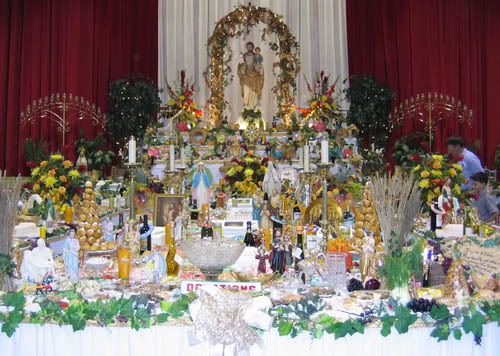
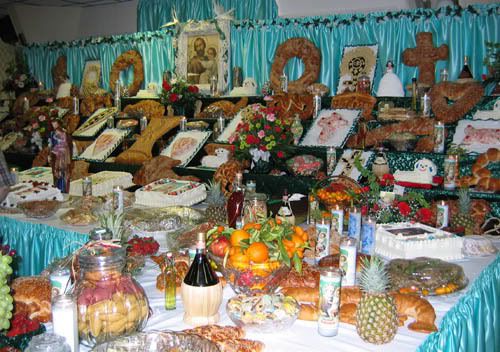
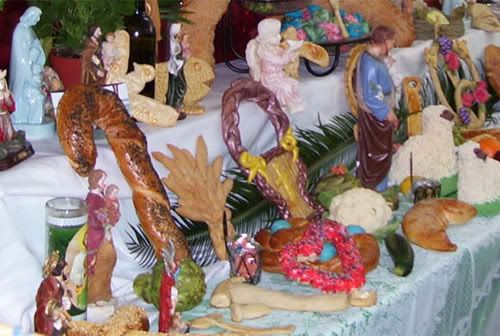
And, of course, no New Orleans-related blog entry of mine is ever complete without a finger flip to those who want the city to just die.
Saturday, March 15, 2008
These Are A Few Of My Favorite (Louisiana) Things
First, I just want to say that I've worked out the issue about the other person in my house knowing where my blog is. I talked to him about this, made it clear that my blog has kind of also become my journal (my fault for showing it to him when it was just political rants & blog round-ups). I told him that he has his 12-step program journals in the house, and that I've never cheated by reading any of them. Then I found out how use the blog stats thing so that I can always sign on and be sure the last time anyone here went to my blog, it was ME - and I told him I would be checking from now on too!
Thanks for the supportive comment.
And now, on to some of my favorite (Louisiana) things.
Thanks, Katrina explains how we can be tourists in our own backyard.
This weekend is Super Sunday, which involves the Mardi Gras Indians. The Mardi Gras Indian tradition grew out of the respect and affection African-Americans had for native-Americans, who often harbored escaped slaves. The traditions involved are unique, fascinating, and very complex - and way beyond my ability to explain here, so instead I will provide a link.
This video is offered as a f**k you to the "just let New Orleans die" crowd - and a polite rebuke to the otherwise fabulous Barbara Ehrenreich, who wouldn't include New Orleans in her book on celebrations of joy in the streets because she said Mardi Gras is too commercialized and because she has apparently seen one too many ads for "Girls Gone Wild: Mardi Gras edition." Here you are, Barbara! Come see for yourself!
This video is of two tribes of the Mardi Gras Indians doing "battle." In the old days, actual fights broke out and scores from other times during the year were settled. In modern times, this is how the chiefs do battle. Ultimately, one chief will bow to the one who is "the prettiest."
If you're interested in this, go to the original of the video above at youtube and there is a link to a New Yorker article. Also, try a search for "Mardi Gras Indians" at youtube.
I'm sort of working the event on Sunday. I am volunteering to be a legal observer for the ACLU, observing and then noting what happens between attendees and the police (more at LaACLU).
I did this kind of volunteering once before, when I was a first year law student and member of the National Lawyers Guild (I went to type that last night and it came out "National Lawyers Guilt - how Freudian!). Anyway, that was when friends at the Peace and Justice Action League of Spokane held this protest in which they sat down on the highway outside of the Air Force base. At the time, I was so amazed by how professonal and polite the many police and military and riot control units present were. Now that the ACLU has used the Freedom of Information Act to obtain our FBI files (the law students referenced on page 12 would include moi), it is abundantly clear why law enforcement were SOO nice. Anyway, so I am going to do that for Super Sunday.
Next, my favorite author in the world, James Lee Burke, gives an interview to the Sydney Morning Herald. (sigh)
NEW ORLEANS isn't just a place for bestselling crime writer James Lee Burke. Nobody could describe it - the good and the bad - the way he does without a deep well of affection. Love even: "You woke in the morning to the smell of gardenias, the electric smell of the streetcars, chicory coffee and stone that has turned green with lichen. The light was always filtered through trees, so it was never harsh, and flowers bloomed year-round."
That's a blues musician talking, a character from Jesus Out To Sea, one of Burke's most personal stories. He's clinging to a roof in "the Big Sleazy" after Hurricane Katrina has ripped it open. He goes on: "New Orleans was a poem, man, a song in your heart that never died … I only got one regret. Nobody ever bothered to explain why nobody came for us."
I went to a book signing of Burke's at a fabulous indie bookstore called Auntie's. At the time, I had been living up North for about ten years, and Burke's books were the closest thing I could afford to a trip home. When it was my turn to have him sign my book, I told him that I was from New Orleans and that I used his books for mental transport back there, then I said, "Thank you so much for writing to life some quirky, recognizable Louisiana characters who aren't just the same old Scarlett and Rhett stereotypes. It means a lot to me." He stopped in the middle of signing, looked up abruptly, kind of searched my face for a moment, then said, "Why, thank you, ma'm." (another sigh)
I walked into my therapist's office one day carrying one of Burke's books and was amazed to learn that she'd never heard of him. She wanted to know specifically what I like about his novels (especially since, as I'd told her, I rarely read fiction). As I tried to describe the complexity of the Dave Robichaux character and the complexity of the world as Burke - accurately - depicts it, where cops have Vietnam flashbacks, occassional violent tempers, and weekly 12 step meetings, where there is honor among thieves but little among politicians and patriarchs, my therapist pointed out that Burke's novels and characters reflect the complexity of my life's experiences. It's true. I've found the good guys aren't easy to tell from the bad guys. I've found little of the black and white I crave, but lots of the gray I dread.
She's right. Burke's complexity gets me (and, if you read the interview, that complexity of ordinary characters, what he calls "the bottom up story" is what he is trying to tell). It's also, however, the simple fact that his descriptions of my beloved Louisiana are melt in your mouth poetry.
Perhaps I carried too many memories of the way the city used to be. Maybe I should not have returned. Maybe I expected to see the streets clean, the power back on, the crews of carpenters repairing ruined homes. But the sense of loss I felt while driving down St. Charles was worse than I had experienced right after the storm. New Orleans had been a song, not a city. Like San Francisco, it didn't belong to a state; it belonged to a people.
When Clete and I [had] walked the beat on Canal, music was everywhere. Sam Butera and Louis Prima played in the Quarter. Old black men knocked out "The Tin Roof Blues" in Preservation Hall. Brass-band funerals on Magazine shook the glass in storefront windows. When the sun rose on Jackson Square, the mist hung like cotton candy in the oak trees behind the St. Louis Cathedral. The dawn smelled of ponded water, lichen-stained stone, flowers that bloomed only at night, coffee and freshly baked beignets in the Cafe du Monde. Every day was a party, and everyone was invited and the admission was free.
The grandest ride in America was the St. Charles streetcar. You could catch the old green-painted, lumbering iron car under the colonnade in front of the Pearl and for pocket change travel on the neutral ground down arguably the most beautiful street in the Western world. The canopy of live oaks over the natural ground created a green-gold tunnel as far as the eye could see. On the corners, black men sold ice cream and sno'balls from carts with parasols on them, and in winter the pink and maroon neon on the Katz and Besthoff drugstores glowed like electrified smoke inside the fog ...
Every writer, every artist who visited New Orleans fell in love with it. The city might have been the Great Whore of Babylon, but few ever forgot or regretted her embrace. (a little more...yum)
Hat tip New Orleans News Ladder for the James Lee Burke interview.
I'll close with this, "Unsuffer Me," by Louisiana GODDESS Lucinda Williams. This isn't really a video, but it plays the song, which is fabulous. Lean back and let Lucinda massage the sore spots in your soul.
Sunday, March 2, 2008
Potpourri
LonerGrrrl explains the need for women only spaces. Just brilliant! (hat tip to The Burning Times)
What brings this subject to the forefront just now is the inclusion of men at a Sheffield, UK, "Reclaim the Night" rally. At rallies I've attended in the past, there was a "SpeakOut Against Rape" portion that was indoors and included men as well as women. There was a march in the streets for women only. While women marched, men held some sort of consciousness-raising discussions indoors. I would have been very upset had men been allowed in the march. The idea is for WOMEN to insist on our right to be in the streets, unescorted, after dark.
Another thing bringing this subject to the forefront just now is the inclusion of men on the York Student Union's Women's Committee.
The latest Carnival of Radical Feminists is up.
There is also the latest Carnival Against Pornography and Prostitution.
Hillary Clinton keeps campaign contributions from a CEO with a brazen history of sexual harassment. It's as bad as the Jack Nicholson endorsement. It makes me wonder why these men donate to a woman candidate anyway. Guilty consciense? Cluelessness? With Nicholson, he does have a movie clip in his endorsement film in which he says, "There's nothing sexier than a woman you have to salute in the morning." Other than maybe repeatedly bashing a woman's head into the floor, I guess. What is it - some kind of domination fetish? Because we already know it's always about the sex. Always. Vote for Hillary because she's a member of the sex caste and it's sexy to pretend she's the boss. Pardon me while I barf.
The U.N.'s Commission on the Status of Women is meeting this week.
On the American presidential campaign: "Leveraging the Power of Race and Gender".
Remembering Barbara Seaman
On the bus with Obama, in search of some Howlin' Wolf: here.
Leonard Sax and Michael Gurian keep pushing their gender stereotypes into public education.
Andrea Smith has been denied tenure - letter-writing campaign.
Linking misogyny and murder in the U.K.: here and here. (via feministing)
Charlotte Allen, who previously pronounced Katrina a good thing that happened to New Orleans now announces that women are really, really dumb (both stories at feministing). I realize I'm two years late commenting on her New Orleans column, but I must say that I would love to meet the local who told her Katrina had been a good thing for the city. I wish Allen had interviewed my grandparents, who are in their eighties, who have ended up spending these last years of their lives struggling to rebuild their home. I wish she could have seen my military veteran grandfather in the weeks after Katrina, driving dazed all over Baton Rouge, desperately trying to find new shoes to fit wide, weathered, eighty-plus year old feet, his eyes filling up with tears as he explained, "We try them out for a few days and then have to return them. Honey, when you're our age, you just don't go buy shoes at Wal-Mart." I wish Allen had met my mother-in-law, widowed just a year before Katrina, following forty years of marriage, gas mask on, trying to scrape mold off of things in her home; suddenly hearing every midnight noise magnified through the walls of her FEMA trailer; one night watching the police chase a man who jumped over her fence as she sat trembling in that little can of a building; suddenly realizing just how vulnerable she really was when she was sexually propositioned in her wrecked home by a contractor she informed about her recent widowhood; spending countless hours for more than a year calling government agencies, contractors, repair companies, delivery companies, utility companies, the mortgage holder, insurance companies, friends, family members. I wish Allen had talked to my mother, a schoolteacher who got transferred to a school 90 minutes and two toll bridges away from her home (without any compensation for increased gasoline costs), who lived in a rental property the owners refused to clean up (these owners threatened to double the rent when she complained), who slept each night for six months listening to the tree rustling inside of the ceiling above her bed, there where it had been lodged since Katrina, hearing critters scurrying around up there until she finally couldn't take it anymore, the nerve pills making her too dopey to work, so she finally moved 2400 miles from here. I wish Ms. Allen could interview everyone we know about now living under the threat of getting cancer as a result of exposure to the formaldehyde in their FEMA trailers.
Can I just say something to Charlotte Allen? Fuck. You.
(I know that last part wasn't especially well written, but I'm tired and that article really made me mad.)
What brings this subject to the forefront just now is the inclusion of men at a Sheffield, UK, "Reclaim the Night" rally. At rallies I've attended in the past, there was a "SpeakOut Against Rape" portion that was indoors and included men as well as women. There was a march in the streets for women only. While women marched, men held some sort of consciousness-raising discussions indoors. I would have been very upset had men been allowed in the march. The idea is for WOMEN to insist on our right to be in the streets, unescorted, after dark.
Another thing bringing this subject to the forefront just now is the inclusion of men on the York Student Union's Women's Committee.
The latest Carnival of Radical Feminists is up.
There is also the latest Carnival Against Pornography and Prostitution.
Hillary Clinton keeps campaign contributions from a CEO with a brazen history of sexual harassment. It's as bad as the Jack Nicholson endorsement. It makes me wonder why these men donate to a woman candidate anyway. Guilty consciense? Cluelessness? With Nicholson, he does have a movie clip in his endorsement film in which he says, "There's nothing sexier than a woman you have to salute in the morning." Other than maybe repeatedly bashing a woman's head into the floor, I guess. What is it - some kind of domination fetish? Because we already know it's always about the sex. Always. Vote for Hillary because she's a member of the sex caste and it's sexy to pretend she's the boss. Pardon me while I barf.
The U.N.'s Commission on the Status of Women is meeting this week.
On the American presidential campaign: "Leveraging the Power of Race and Gender".
Remembering Barbara Seaman
On the bus with Obama, in search of some Howlin' Wolf: here.
Leonard Sax and Michael Gurian keep pushing their gender stereotypes into public education.
Andrea Smith has been denied tenure - letter-writing campaign.
Linking misogyny and murder in the U.K.: here and here. (via feministing)
Charlotte Allen, who previously pronounced Katrina a good thing that happened to New Orleans now announces that women are really, really dumb (both stories at feministing). I realize I'm two years late commenting on her New Orleans column, but I must say that I would love to meet the local who told her Katrina had been a good thing for the city. I wish Allen had interviewed my grandparents, who are in their eighties, who have ended up spending these last years of their lives struggling to rebuild their home. I wish she could have seen my military veteran grandfather in the weeks after Katrina, driving dazed all over Baton Rouge, desperately trying to find new shoes to fit wide, weathered, eighty-plus year old feet, his eyes filling up with tears as he explained, "We try them out for a few days and then have to return them. Honey, when you're our age, you just don't go buy shoes at Wal-Mart." I wish Allen had met my mother-in-law, widowed just a year before Katrina, following forty years of marriage, gas mask on, trying to scrape mold off of things in her home; suddenly hearing every midnight noise magnified through the walls of her FEMA trailer; one night watching the police chase a man who jumped over her fence as she sat trembling in that little can of a building; suddenly realizing just how vulnerable she really was when she was sexually propositioned in her wrecked home by a contractor she informed about her recent widowhood; spending countless hours for more than a year calling government agencies, contractors, repair companies, delivery companies, utility companies, the mortgage holder, insurance companies, friends, family members. I wish Allen had talked to my mother, a schoolteacher who got transferred to a school 90 minutes and two toll bridges away from her home (without any compensation for increased gasoline costs), who lived in a rental property the owners refused to clean up (these owners threatened to double the rent when she complained), who slept each night for six months listening to the tree rustling inside of the ceiling above her bed, there where it had been lodged since Katrina, hearing critters scurrying around up there until she finally couldn't take it anymore, the nerve pills making her too dopey to work, so she finally moved 2400 miles from here. I wish Ms. Allen could interview everyone we know about now living under the threat of getting cancer as a result of exposure to the formaldehyde in their FEMA trailers.
Can I just say something to Charlotte Allen? Fuck. You.
(I know that last part wasn't especially well written, but I'm tired and that article really made me mad.)
Tuesday, February 26, 2008
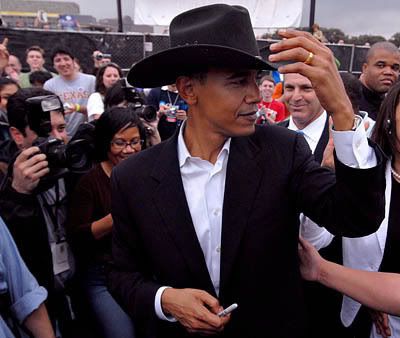
Shakes on the Obama Cowboy Hat Photo
Wolfrum at Shakesville compares cowboy costumes on politicians

to politicians dressed as Somali elders

and reminds us what dressing like the enemy really looks like:

Says Wolfrum, of the Obama-with-cowboy-hat photo:
to politicians dressed as Somali elders
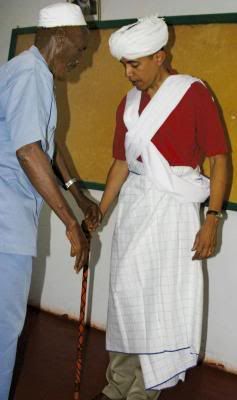
and reminds us what dressing like the enemy really looks like:

Says Wolfrum, of the Obama-with-cowboy-hat photo:
When I first saw the photo, I couldn't believe it. I thought it had to be photoshopped, a hoax. After all, how could Barack Obama betray America so offensively? How could he insult the soldiers who made the ultimate sacrifice?
I don't know the answers to these questions, but I'm shaken to the core. Without question, Obama's patriotism must be called into question for appearing dressed like an enemy of the American people.
Brilliant, Wolfrum. Brilliant.
This reminds me of Bill Maher's "I'm Swiss"
What is with Bush wearing the cowboy hat and the cowboy boots and the cowboy belt? Memo! Um, there are no more cowboys, which means you're wearing a costume. OK? You might as well be dressed as Sherlock Holmes or a pirate.
As for Obama, like I said over at Shakes' place, I think politicians are pretty much required to do local pandering when they campaign. Here in south Louisiana, visiting politicians all visit Leah Chase
and get their pictures taken eating her gumbo (Owner Leah Chase patted Obama on his stomach and told him, "Get a little gumbo right quick. You’re too frail baby. We gotta fatten you up a bit.” Times Picayune)
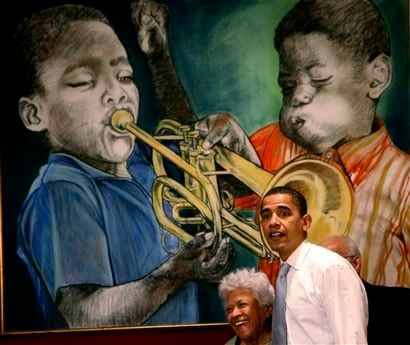
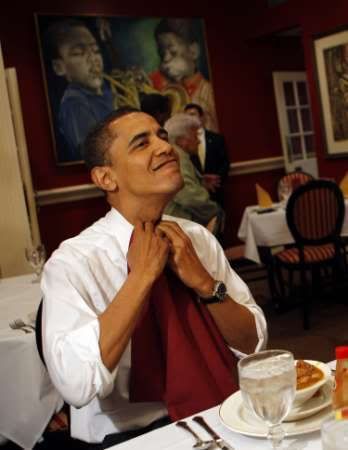
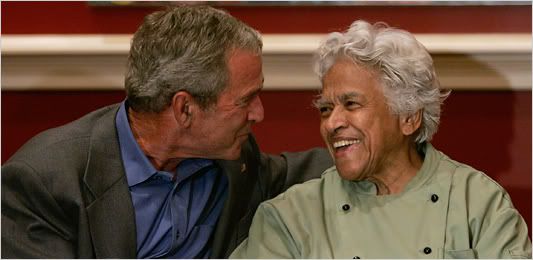
It's all about kissing the civic ring.
not that Leah Chase doesn't deserve it though!
Subscribe to:
Posts (Atom)